Algae, Mold & Mildew: The Trio Quietly Aging Your Home
Green streaks, black spots, and roof stains aren't just dirt. Learn how algae, mold, and mildew age your DFW home — and why soft washing kills them at the root.
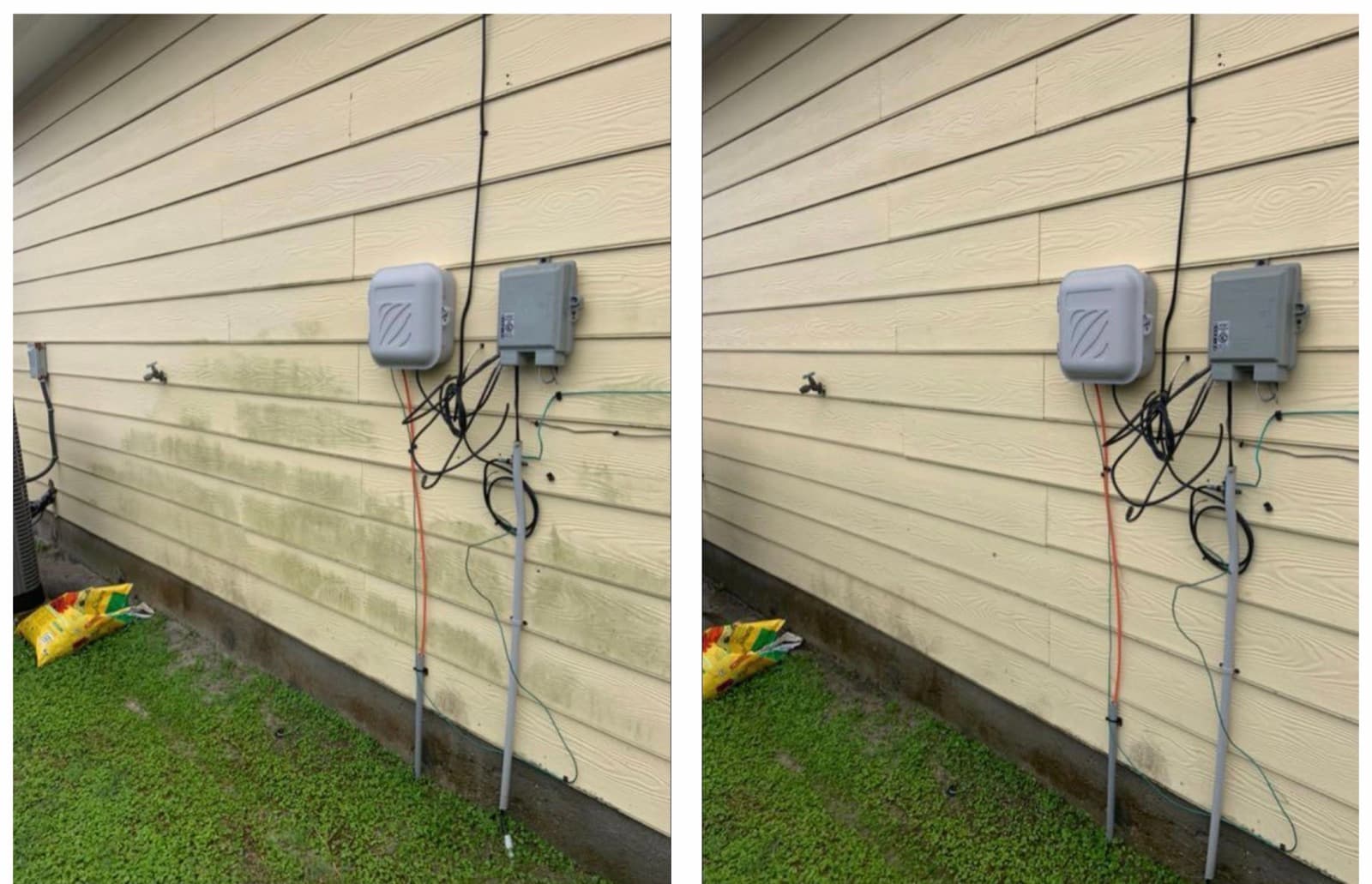
That green tint creeping up your north-facing wall, the black streaks on your roof, the dingy film on your siding — most homeowners write it all off as dirt and figure it'll rinse away eventually. It won't. Those are living organisms, and left alone they quietly age and even damage your home.
Let's break down the trio behind it — algae, mold, and mildew — why North Texas is such fertile ground for them, and why killing them at the root matters far more than just rinsing them off.
Meet the Trio
They get lumped together, but they're a little different:
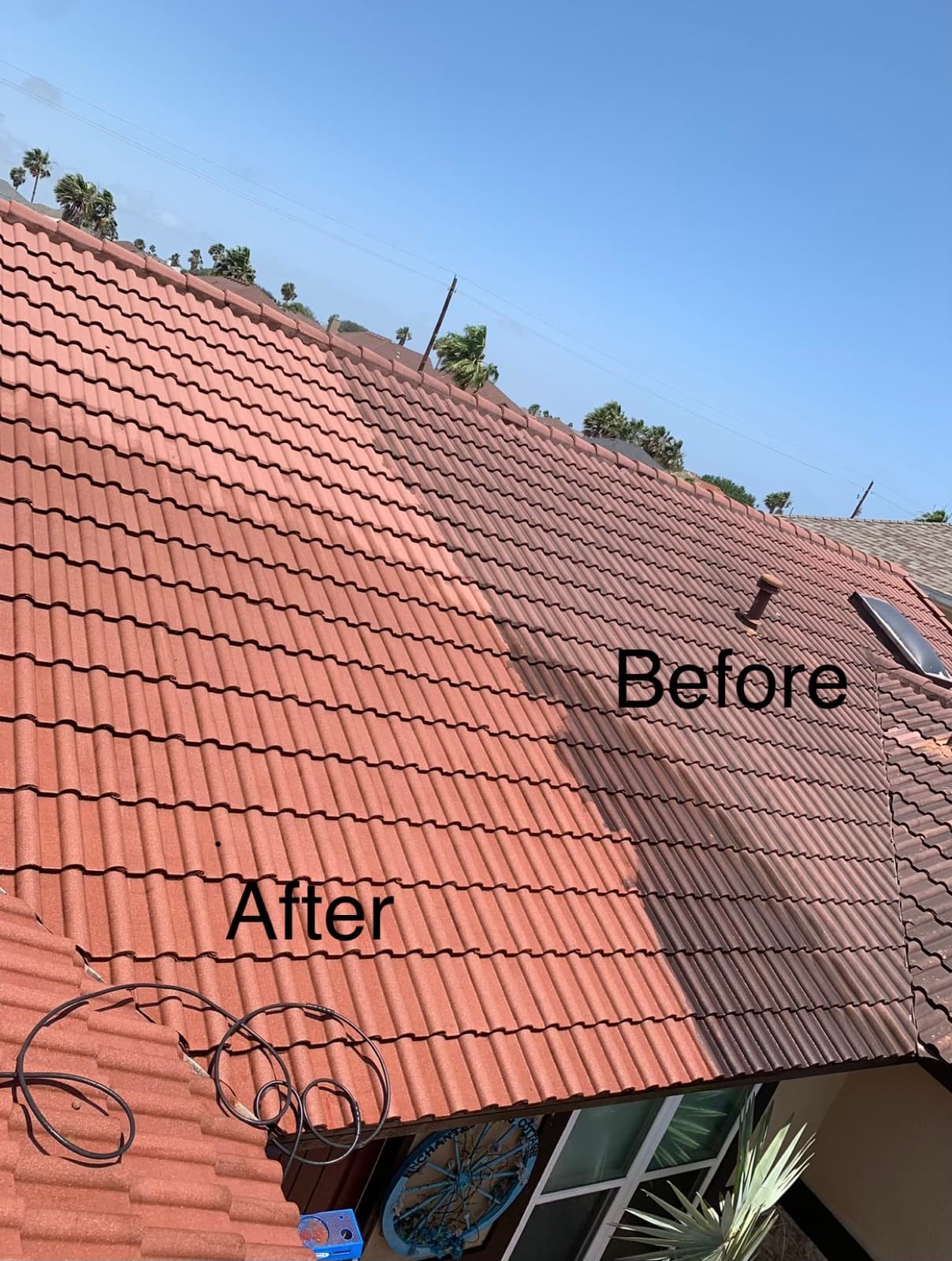
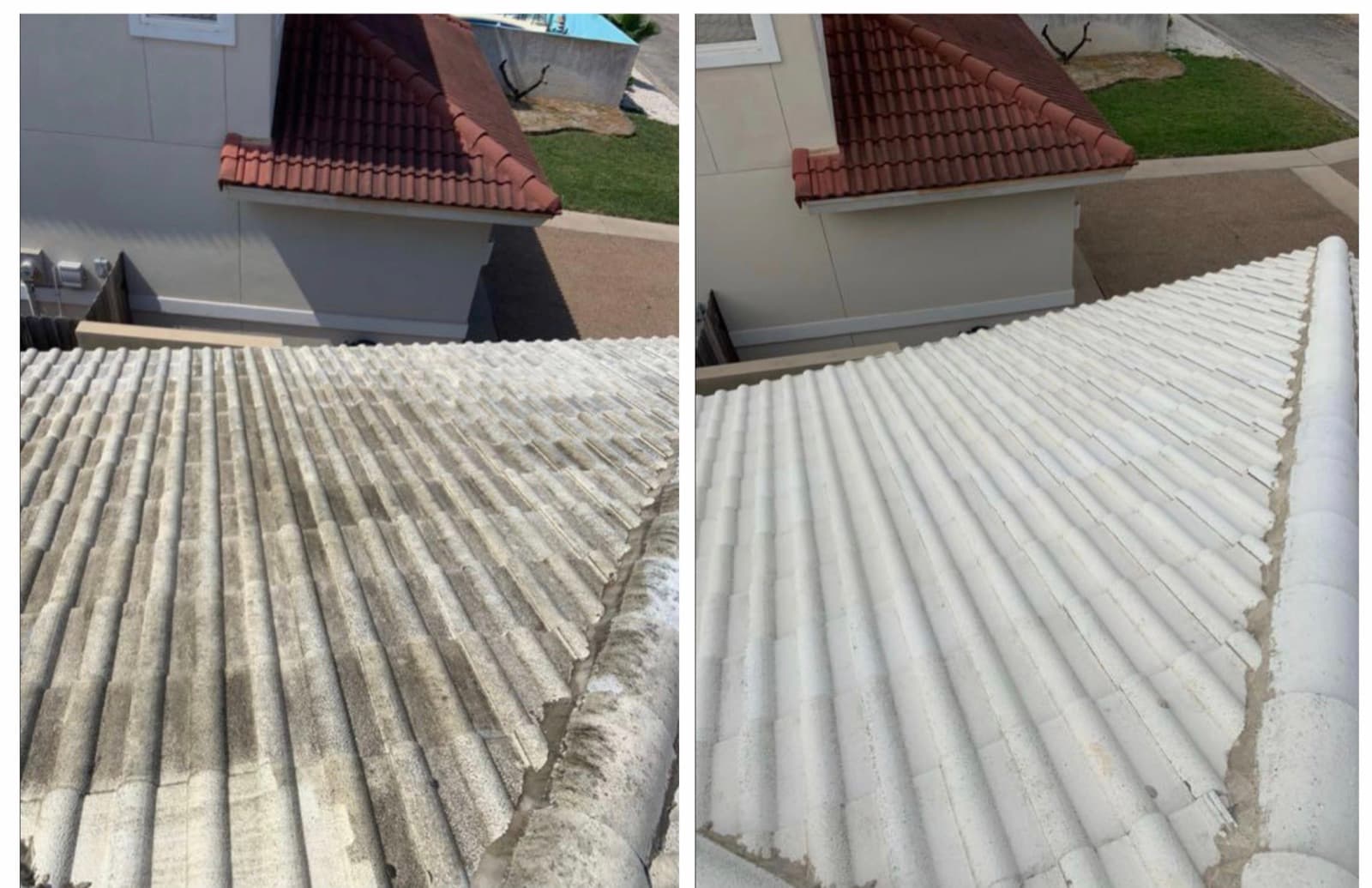
- Algae is the green (and sometimes the dark, almost-black) staining you see on siding, brick, fences, and especially north- and east-facing walls that stay shaded and damp. On roofs, the black streaks running down the shingles are a blue-green algae that feeds on the limestone filler in the shingles themselves.
- Mold is the fuzzy, often black or dark-green growth that shows up in persistently damp, shaded spots and can work into porous surfaces.
- Mildew is the flat, powdery, gray-to-black spotting you'll find on siding, soffits, eaves, and painted surfaces.
All three are biological. They grow, spread, and root into the surface. That's the key thing — they aren't dirt sitting on top, they're organisms living in and on your home's exterior.
Why North Texas Is a Perfect Breeding Ground
DFW gives this trio everything it needs. Our heat and humidity create a warm, moist environment for much of the year. Spring and fall bring regular rain and heavy dew. Mature oak trees and dense landscaping throw shade that keeps walls from drying out. And our clay soil holds moisture against foundations and lower walls.
Put it together and the shaded, north-facing side of a home in Frisco, McKinney, or Richardson is essentially a greenhouse for algae and mildew. It's why one side of your house can be visibly green while the sunny side looks fine.
How the Trio Actually Ages Your Home
This isn't just cosmetic, and that's the part people miss.
- Roof shingles: roof algae eats the limestone filler in asphalt shingles, and the dark streaks absorb extra heat. Over time that can shorten the life of the roof.
- Paint and siding: mildew and algae degrade paint, hold moisture against the surface, and accelerate the breakdown of the finish.
- Wood: algae and mold trap moisture against fences, decks, and trim, contributing to rot.
- Health and air: growth around entryways, windows, and shaded walls is simply unpleasant to live next to, and slick algae on walkways becomes a real slip hazard.
Left unchecked, the trio takes years off the life of your exterior surfaces. Removing it isn't vanity — it's maintenance that protects what your home is made of.
Why Pressure Washing Is the Wrong Tool Here
Here's the most important point in this whole article. You cannot solve a biological problem with brute force.
If you blast algae or mildew off with a high-pressure washer, you knock the visible layer loose — but the roots stay behind, embedded in the surface. Within weeks to a few months, the growth comes right back, often looking just as bad. You've treated the symptom and missed the cause. And on top of that, high pressure can damage siding, force water behind it, strip paint, and tear up roof shingles.
| Approach | What It Does | Result |
|---|---|---|
| High-pressure washing | Blasts off the surface layer | Algae regrows in weeks; risk of surface damage |
| Soft washing | Applies a solution that kills the organism | Growth is gone at the root; stays clean far longer |
Soft Washing: Killing It at the Root
Soft washing is the correct method for algae, mold, and mildew. It uses low pressure combined with specialized cleaning solutions that kill the organisms at the root rather than just dislodging them. The solution does the work — it sanitizes the surface, kills the growth, and lifts the staining — while the gentle water pressure simply rinses it clean.
The payoff is twofold. First, it's safe for delicate surfaces — siding, stucco, painted trim, soffits, roof shingles, and wood all tolerate soft washing where they'd be damaged by high pressure. Second, it delivers results that last. Because the organism is actually dead and not just knocked loose, your home stays clean for far longer — typically far past when a pressure-blasted surface would already be greening up again.
It's the same logic across the whole exterior: house washing, roof cleaning, fences, and even gutter brightening to clear the dark oxidation and grime streaks off the gutter faces.
Common Mistakes Homeowners Make
- Mistaking it for dirt. It's a living organism that will come back until it's killed at the root.
- Pressure-washing the roof. This strips granules and voids shingle warranties — algae roofs need a gentle, solution-based wash.
- Only cleaning the front of the house. The shaded north and east sides are where the trio thrives.
- Waiting until it's everywhere. The longer it grows, the deeper it roots and the more it has aged the surface.
Let's Stop the Trio Before It Spreads
If green streaks, black roof stains, or mildew spotting are creeping across your home, Summit Surface Solutions can clear them out — and keep them gone. Our soft washing approach kills algae, mold, and mildew at the root for results that last, safely across siding, roofs, fences, and gutters. We serve homeowners throughout the DFW metroplex with free, no-pressure quotes, so reach out whenever you'd like a fresh look at your home.
Need this done right?
Summit Surface Solutions serves Dallas–Fort Worth, Texas with insured, method-smart exterior cleaning. Free quotes, guaranteed results.