Cleaning Flagstone, Travertine & Limestone Patios the Right Way
Natural stone patios need gentle care. Learn how to safely clean flagstone, travertine, and limestone in DFW without etching or damaging the stone.
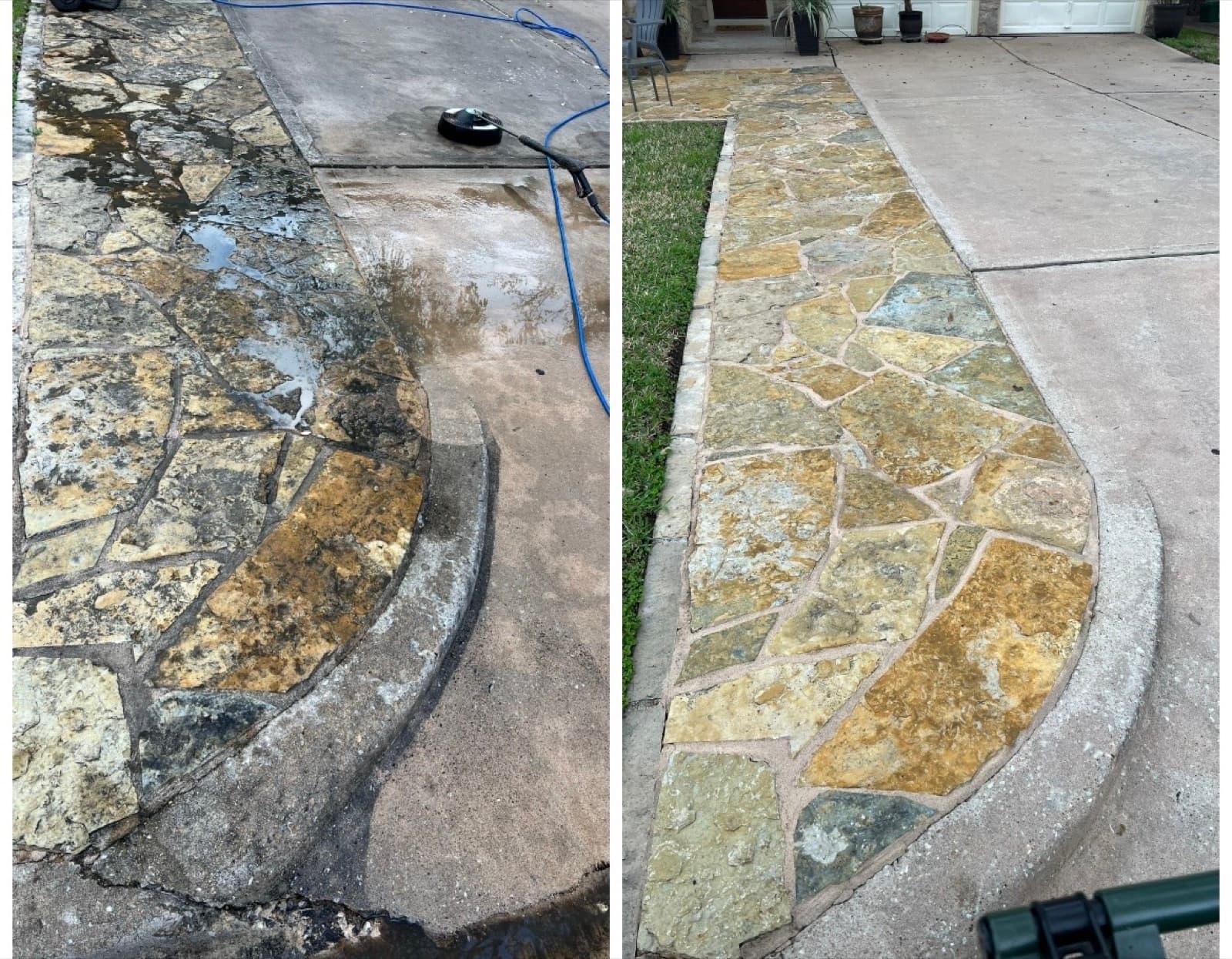
That gorgeous flagstone patio, the travertine around the pool, the limestone walkway leading to your front door — natural stone is one of the most beautiful features a North Texas home can have. It's also one of the easiest to ruin with the wrong cleaning approach. Stone is not concrete, and treating it like concrete is exactly how patios get etched, pitted, and permanently damaged.
Why Natural Stone Needs Special Handling
Concrete is a tough, uniform, man-made surface that can take serious pressure. Natural stone is the opposite — it's softer, more porous, and far less forgiving. Each type behaves a little differently:
- Flagstone is a layered sedimentary stone that can flake and spall if you hit it with too much pressure or catch it at the wrong angle.
- Travertine is full of natural pits and holes and is sensitive to acids, which can eat into the surface and leave dull etch marks.
- Limestone — the same stone you see all over DFW in retaining walls and entryways — is soft and highly reactive to acidic cleaners. The wrong product will literally dissolve the surface.
The unifying rule: natural stone is delicate, and aggressive pressure or harsh chemistry causes damage you can't undo.
The Right Method: Gentle Cleaning, Not Blasting
The professional approach to natural stone is closer to a soft wash than a pressure wash. Instead of relying on force, you rely on the right cleaning solution to do the work, applied at low pressure and rinsed gently.
For the green and black organic growth that loves our humid DFW climate, a pH-balanced cleaning solution kills the algae and mildew at the root and then rinses away, lifting the staining without ever stressing the stone. Killing the growth at the root is what makes the clean last instead of returning in a few weeks.
When pressure is used at all, it's kept low and even, often with a gentle surface cleaner held at a safe height, never a tight high-pressure tip jammed up against the stone.
Method by Stone Type
| Stone | Cleaner | Pressure | Watch Out For |
|---|---|---|---|
| Flagstone | pH-neutral solution | Low | Flaking and spalling from high pressure |
| Travertine | Non-acidic, gentle | Low | Acid etching, water in the pits |
| Limestone | Strictly non-acidic | Low | Surface dissolving from acidic products |
The One Thing You Should Never Do
If you remember nothing else, remember this: never use an acidic cleaner on limestone or travertine. That includes many off-the-shelf concrete and rust removers, some all-purpose cleaners, and definitely muriatic acid.
Acid reacts with the calcium carbonate in these stones and etches them — leaving dull, rough patches that no amount of cleaning will restore. The only fix at that point is professional resurfacing or honing. It's a costly, heartbreaking mistake, and it's why stone should never be cleaned with whatever happens to be in the garage.
Sealing: The Step That Protects Your Investment
Because natural stone is porous, it soaks up spills, stains, and moisture. After a proper cleaning is the perfect time to consider sealing the stone.
A good sealer:
- Helps repel red clay stains, food and drink spills, and grease from the grill.
- Slows down the return of algae and mildew in our humidity.
- Makes future cleanings far easier, since less grime works its way into the pores.
Around pools — extremely common on travertine decks in Frisco, Prosper, and Southlake — sealing also helps the stone shrug off the constant splash and sunscreen residue.
Common Natural Stone Cleaning Mistakes
- Using a pressure washer on a high setting. This is the fastest way to flake flagstone, blow out the joints, and pit soft stone. More pressure is never the answer with natural stone.
- Grabbing an acidic cleaner. As covered above, on limestone and travertine this causes permanent etching. Always confirm a product is safe for your specific stone.
- Skipping the joints. Sand or mortar joints between flagstone can be washed out by careless cleaning, leaving a loose, uneven patio.
- Forgetting to reseal. If your stone was sealed before, aggressive cleaning can wear that sealer down, so resealing afterward keeps it protected.
- Letting algae sit. In shaded, damp DFW backyards under oak trees, organic growth on stone gets slick and genuinely unsafe to walk on. Don't wait until someone slips.
How Often Should You Clean Natural Stone?
Most stone patios and walkways in North Texas benefit from a gentle cleaning once a year, ideally in spring, to clear the winter's organic growth before the patio season. Shaded areas and poolside travertine that stay damp may want it more often. If your stone is sealed, you'll generally stretch the time between cleanings because the surface resists staining.
The Bottom Line
Flagstone, travertine, and limestone reward gentle, knowledgeable care and punish brute force. The right cleaning solution applied at low pressure removes algae and grime — and kills it at the root — without etching, flaking, or dulling the stone, giving you results that last and a patio that stays beautiful for years.
If you've got natural stone anywhere across DFW — Plano, Frisco, McKinney, Allen, Dallas, Fort Worth, or beyond — that needs careful, expert cleaning, Summit Surface Solutions is here to help. We treat stone with the gentle approach it deserves and offer free, no-pressure quotes — reach out anytime and we'll take a look.
Need this done right?
Summit Surface Solutions serves Dallas–Fort Worth, Texas with insured, method-smart exterior cleaning. Free quotes, guaranteed results.