Commercial Pressure Washing in DFW: What Business Owners Need to Know
A practical guide to commercial pressure washing for DFW business owners and property managers — scheduling, slip hazards, curb appeal, and recurring maintenance.
If you own or manage a commercial property in the DFW metroplex, the exterior of your building is doing a sales pitch every single day — whether you want it to or not. A grimy entryway, oil-stained parking lot, or algae-streaked north wall tells customers something before they ever read your sign.
This guide walks through what commercial pressure washing actually involves in North Texas, how to schedule it without disrupting your business, and how to think about it as maintenance rather than a one-time scramble before an inspection.
Why Commercial Properties Get Dirty Faster Here
DFW is a tough climate for exterior surfaces. We get blistering summer heat, surprise humidity, spring pollen that coats everything in yellow-green, and a clay-soil environment that throws red dust onto your walls and walkways. Add high foot traffic, drive-thru lanes, dumpster pads, and grease from restaurants, and commercial surfaces take a beating that a typical home never sees.
A few of the usual culprits we clean off commercial buildings across Plano, Frisco, Irving, and Fort Worth:
- Gum and foot-traffic grime on entryway concrete and sidewalks
- Oil and transmission-fluid stains across parking lots and drive-thru lanes
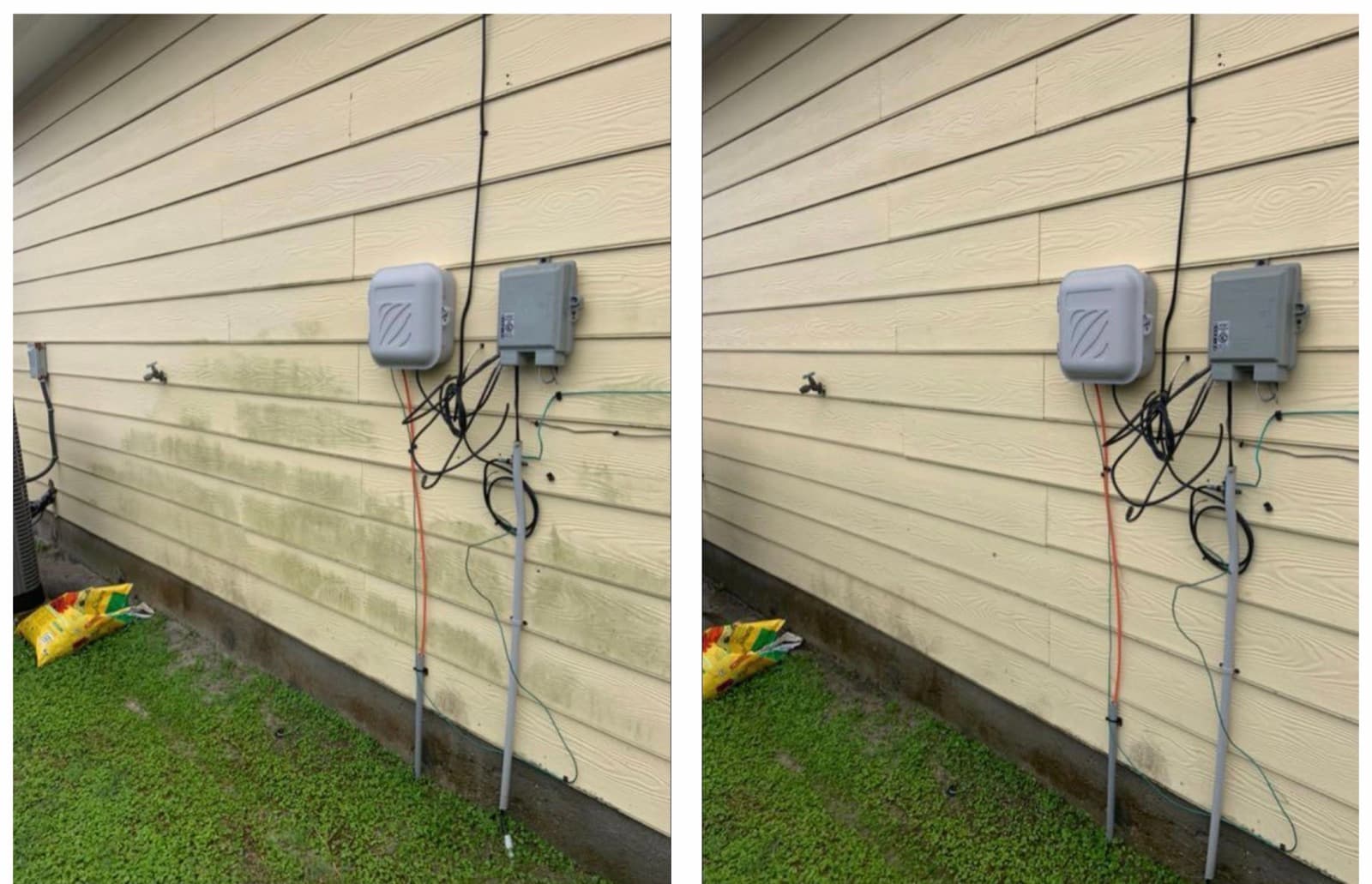
- Algae and mildew on shaded north- and east-facing walls (the green and black streaks)
- Red clay and pollen film on awnings, EIFS, and stucco
- Grease and food residue around restaurant back-of-house and dumpster enclosures
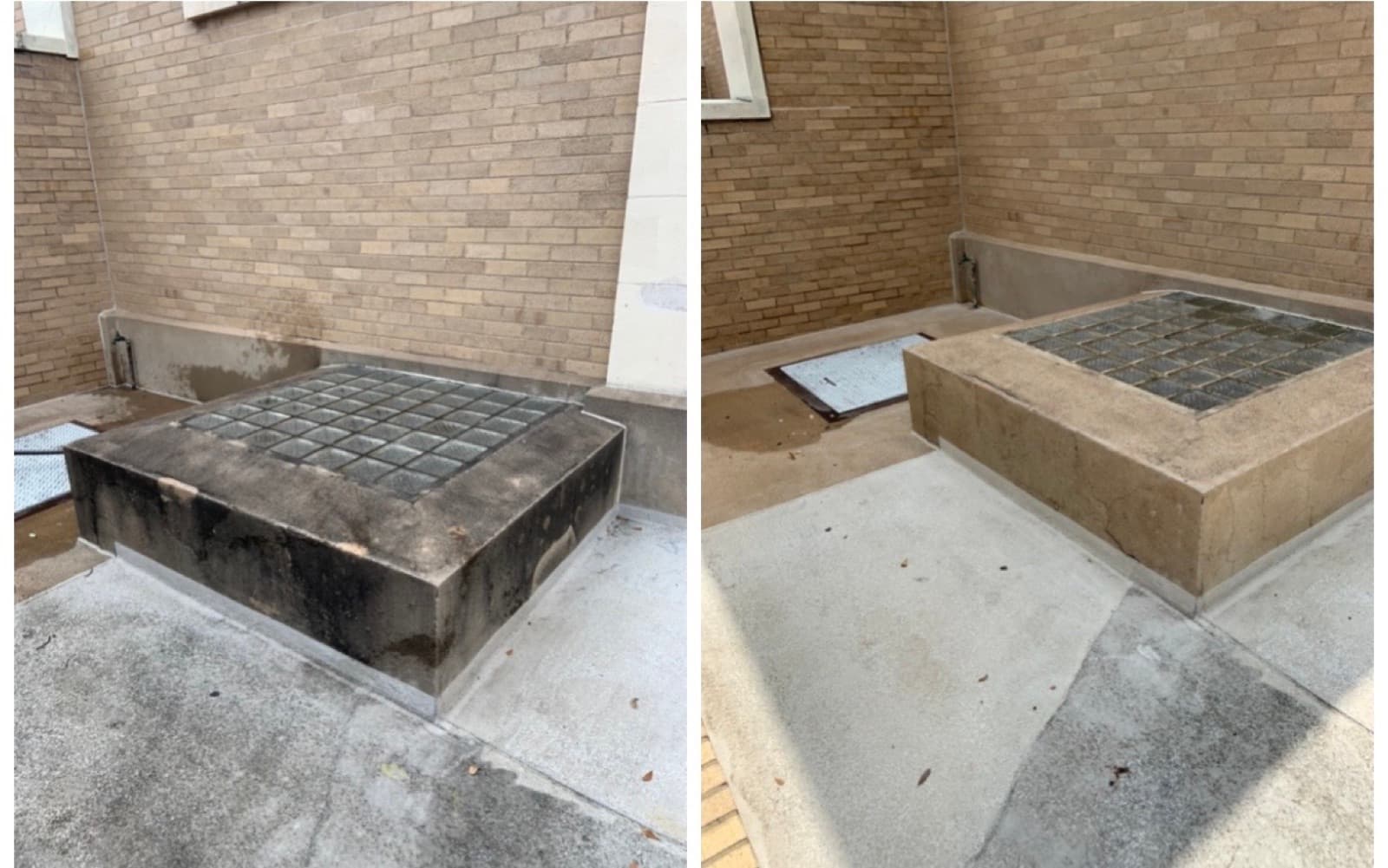
- Hard-water staining and rust from sprinkler overspray on brick and stone
Pressure Washing vs. Soft Washing — and Why It Matters for Your Building
Not every surface should be hit with high pressure, and using the wrong method on a commercial building can cause real damage and real liability.
Pressure washing uses high-pressure water and is the right tool for hard, durable surfaces — concrete sidewalks, parking lots, loading docks, and dumpster pads. For large flat areas we use a surface cleaner, the spinning disc attachment that cleans concrete evenly and avoids the zebra-stripe wand marks you see when an inexperienced crew free-hands it.
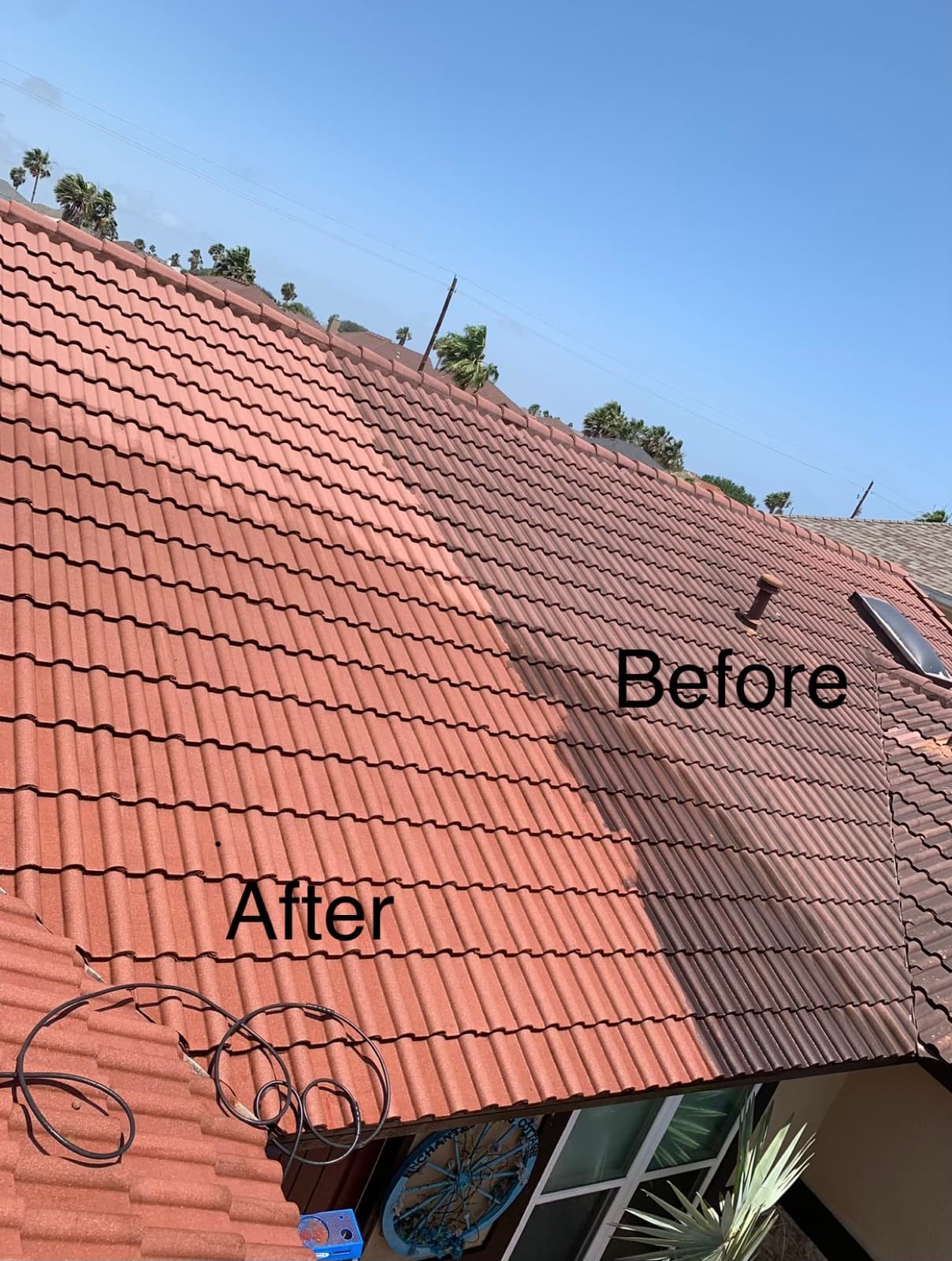
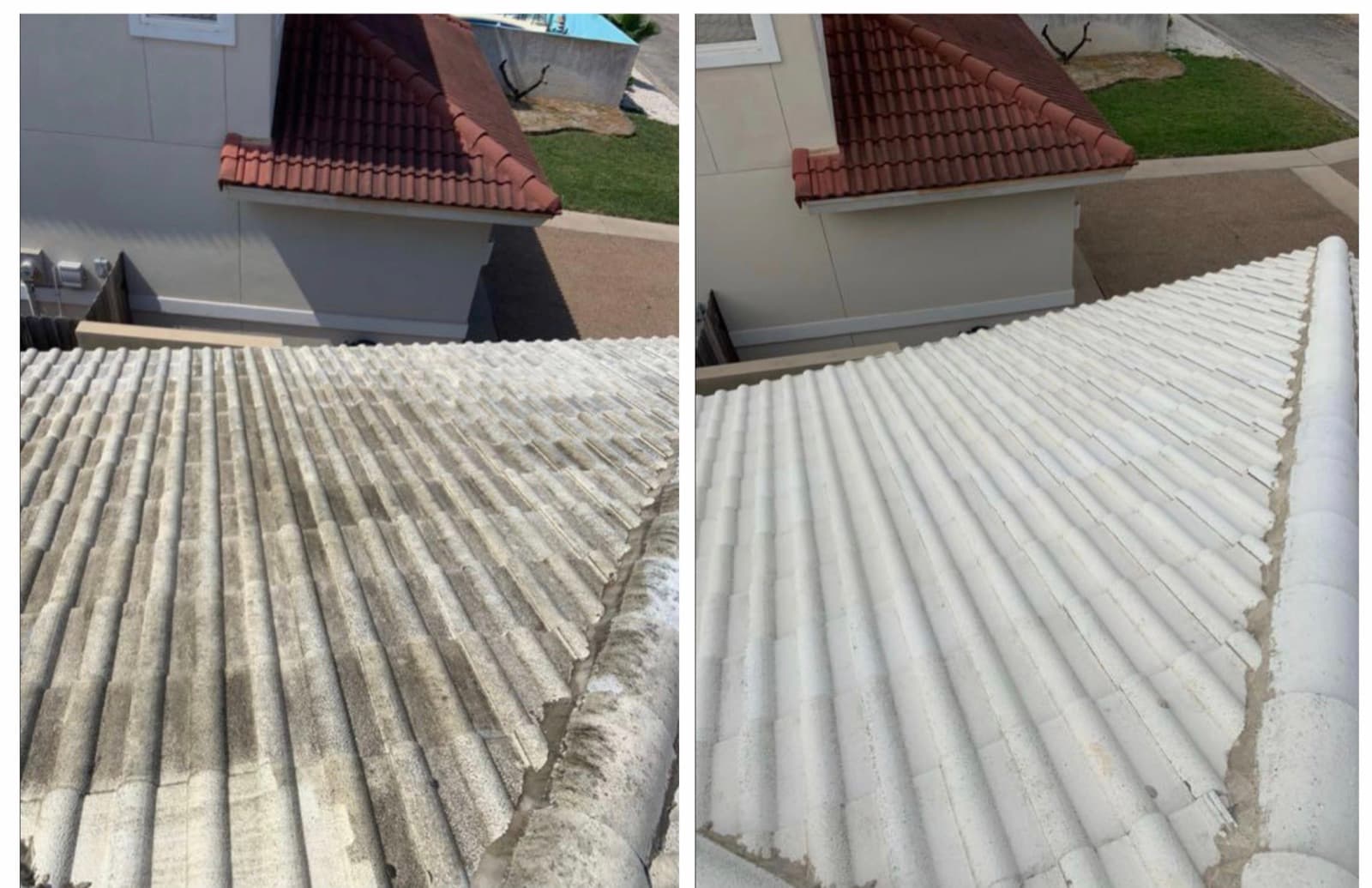
Soft washing uses low pressure plus cleaning solutions that actually kill algae, mold, and mildew at the root rather than just blasting the surface layer off. This is what we use on building exteriors, stucco, EIFS, painted surfaces, awnings, and signage. The difference is huge for results that last — a soft wash keeps the green from creeping back in a few weeks because the organism is dead, not just knocked loose.
| Surface | Method | Why |
|---|---|---|
| Parking lot, sidewalks, loading dock | Pressure washing + surface cleaner | Hard concrete handles high PSI; surface cleaner gives an even finish |
| Building walls, stucco, EIFS, awnings | Soft washing | Low pressure protects the surface; solution kills algae at the root |
| Brick and stone facades | Soft washing | Avoids etching mortar and driving water behind the brick |
| Drive-thru and dumpster pad | Pressure washing + degreaser | Cuts through grease and oil that plain water won't touch |
The Two Things Business Owners Worry About Most
Downtime and Scheduling
You can't have a crew blocking your front door during the lunch rush. The good news is that most commercial exterior cleaning can be scheduled around your hours — early mornings before you open, after close, or overnight for retail centers and restaurants. For multi-tenant properties in places like Richardson or Las Colinas, we coordinate so that no single storefront is blocked for long, and we sequence the work to keep at least one entrance accessible.
A realistic rule of thumb: a typical storefront and entryway can be done in a couple of hours, while a full parking lot or large retail center is usually an overnight or early-morning job.
Slip Hazards and Liability
This is the part a lot of owners overlook. Algae and grease build-up are genuine slip-and-fall hazards, and a slick entryway after a rain is exactly the kind of thing that turns into an insurance claim. Routine cleaning isn't just cosmetic — it removes the biofilm that gets dangerously slippery when wet. We also make sure to manage water runoff responsibly and keep your walkways from becoming a hazard during and right after the cleaning itself.
First Impressions Are a Business Asset
Think about how a customer decides whether a place is well-run. Before they meet your staff or see your product, they walk across your parking lot, up your sidewalk, and through your entry. A clean exterior signals that you pay attention to details. A neglected one quietly suggests the opposite.
For properties competing for tenants or shoppers — strip centers in McKinney, office parks in Plano, restaurants along the Fort Worth corridors — curb appeal is a measurable advantage. Clean concrete, bright awnings, and streak-free glass-adjacent surfaces make the whole property read as cared-for.
Why Recurring Maintenance Plans Make Sense
The single biggest mistake we see commercial clients make is treating exterior cleaning as a one-time emergency — usually right before a property inspection, a lease renewal, or a corporate visit. By then the staining has set, the algae has rooted in, and it takes more work to fix.
A recurring maintenance plan solves this. Depending on your property type, that might look like:
- Restaurants: dumpster pad and back-of-house degreasing every 4 to 8 weeks
- Retail and strip centers: entryways and sidewalks monthly or quarterly; full lot annually
- Office and medical: soft wash of the building and walkways quarterly to semi-annually
- HOA-managed commercial: scheduled cleanings to stay ahead of board complaints
Recurring work keeps surfaces from ever reaching the bad stage, spreads the cost into a predictable budget line, and means you're never scrambling before a big day.
Common Mistakes to Avoid
- Hiring by price alone. A crew that high-pressures your stucco or brick can cause damage that costs far more than the cleaning saved you.
- Waiting until it's embarrassing. Set staining and rooted algae are harder and pricier to remove than routine grime.
- Ignoring the parking lot. Owners obsess over the storefront and forget the lot, which is often the first thing a customer actually touches.
- Skipping the building walls. Pressure-washing the concrete while leaving green-streaked walls makes the whole property look half-finished.
Ready to See How Your Property Could Look?
If your DFW commercial property could use a refresh — or you'd like to get ahead of it with a maintenance plan — Summit Surface Solutions is happy to take a look. We serve business owners and property managers across the metroplex with free, no-pressure quotes and honest recommendations about what your surfaces actually need. Reach out whenever you're ready, and we'll work around your hours, not the other way around.
Need this done right?
Summit Surface Solutions serves Dallas–Fort Worth, Texas with insured, method-smart exterior cleaning. Free quotes, guaranteed results.