The Complete Guide to Driveway Pressure Washing in DFW
Everything DFW homeowners need to know about driveway pressure washing — removing red clay, oil stains, and tire marks for results that last across North Texas.
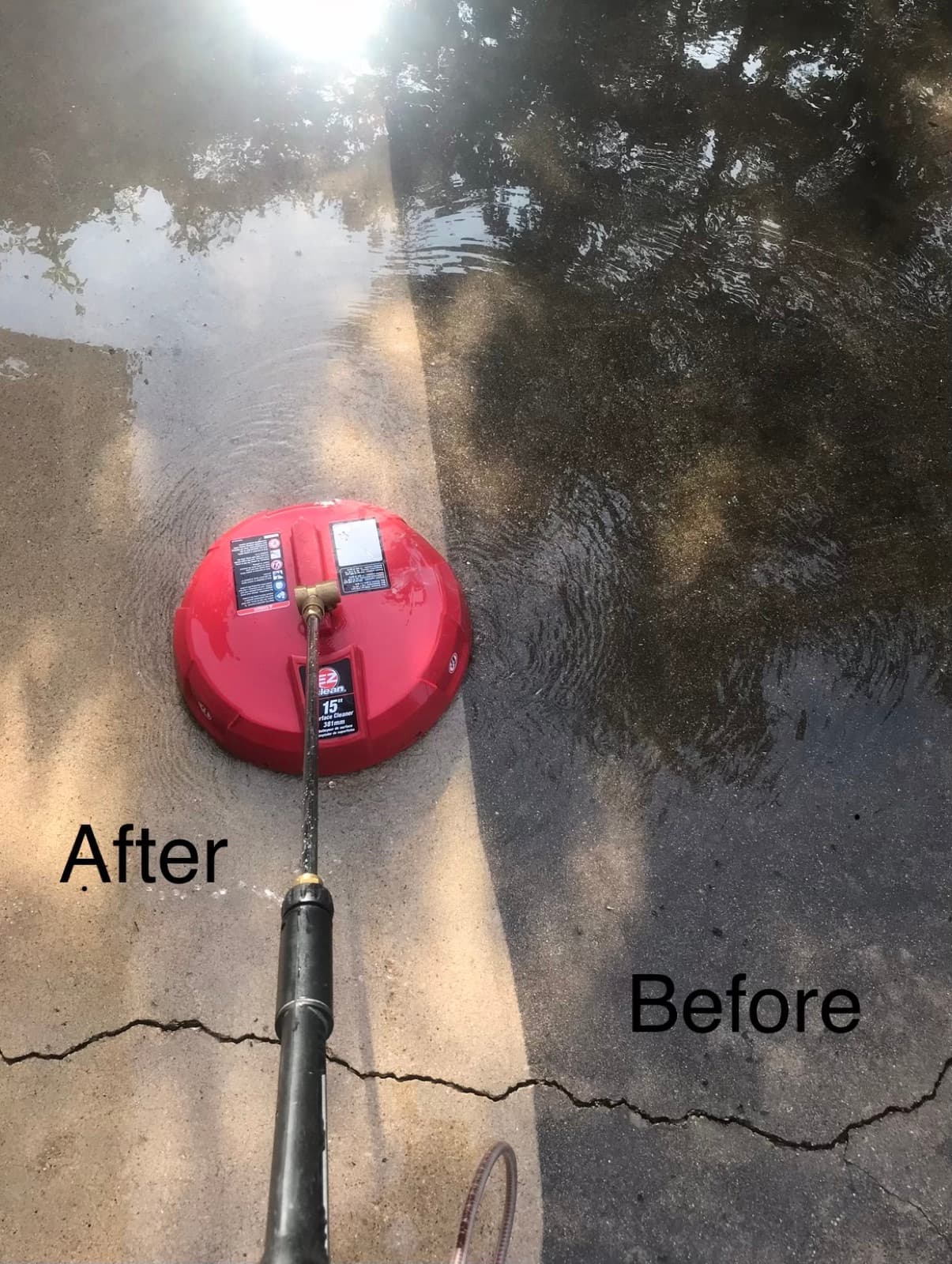
Your driveway is the first thing people see when they pull up to your home, and here in DFW it takes a serious beating — red clay tracked in from the yard, oil drips from the car, pollen in the spring, and that gray-green film that creeps in during our humid summers. The good news is that a properly cleaned driveway can look nearly new again, and getting there is more about technique than muscle.
This guide walks you through how driveway cleaning actually works in North Texas, what causes those stubborn stains, and how to get results that last instead of a clean that fades in a few weeks.
Why DFW Driveways Get So Dirty
We have a specific cocktail of conditions here in the metroplex that most of the country doesn't deal with all at once. Understanding what you're fighting helps you clean it the right way.
- Red clay soil. That iron-rich North Texas clay washes onto your concrete every time it rains and leaves a rusty orange tint that a garden hose will never touch. It's especially common in newer developments around Frisco, McKinney, and Prosper where the topsoil is thin.
- Heat and humidity. Our long, muggy summers are a breeding ground for algae, mildew, and that black gunk you see in the low spots of the driveway. It's not just dirt — it's living organic growth.
- Oak and pecan trees. Mature trees in older neighborhoods like Richardson, Plano, and East Dallas drop tannins, sap, and leaf litter that stain concrete a dingy brown.
- Pollen. Every spring the metroplex turns yellow, and that fine powder settles into the pores of your concrete.
Pressure Washing vs. Surface Cleaning
A lot of homeowners picture someone waving a pressure wand back and forth across the driveway. You can do it that way, but you'll almost always end up with zebra stripes — those uneven lines where the wand cleaned more in one pass than another.
The professional approach uses a surface cleaner, which is a spinning disc that houses two or more nozzles under a flat hood. It rides just above the concrete and cleans in an even, consistent sweep. The result is no streaks, no stripes, and a uniform finish from edge to edge. It's also far faster and uses water more efficiently.
For the borders, edges, and any spots a surface cleaner can't reach, we follow up with a pressure wand to detail the perimeter. That combination is what gives you that crisp, clean look all the way to the grass line.
Tackling the Tough Stains
Not every stain comes up with pressure alone. Here's how the common DFW offenders break down:
| Stain Type | What It Is | How to Treat It |
|---|---|---|
| Red/orange tint | Iron in red clay soil | Specialized rust remover, then rinse |
| Black streaks | Algae and mildew | Soft wash with a cleaning solution that kills it at the root |
| Dark spots | Motor oil and transmission fluid | Degreaser, dwell time, then hot agitation |
| Brown blotches | Tree tannins and leaf litter | Cleaning solution plus surface cleaning |
| White haze | Efflorescence (mineral salts) | Mild acidic cleaner, careful rinse |
The big takeaway: black streaks are alive. If you only blast them with high pressure, you knock the surface growth off but leave the roots behind, and it grows right back within weeks. That's why we soft wash organic staining with a cleaning solution first — it kills the algae and mildew at the root so your clean actually lasts.
Oil Stains Specifically
Oil is the one stain homeowners ask about most. The trick is patience. A good degreaser needs dwell time — usually 10 to 15 minutes — to break the bond between the oil and the concrete before you ever hit it with pressure. Fresh stains come up easily. Old, baked-in stains that have sat through a few Texas summers may need two or three treatments and might not vanish completely, but they'll fade dramatically.
How Often Should You Wash Your Driveway?
In North Texas, most homes benefit from a driveway cleaning once a year, typically in spring after the pollen settles or in fall before the holidays. Homes under heavy tree cover or in older, shadier neighborhoods may want to go twice a year because they collect organic growth faster.
If your HOA in a community like Castle Hills, Lantana, or Light Farms sends out letters about exterior upkeep, an annual wash usually keeps you well ahead of any complaints.
Common Driveway Washing Mistakes
We see these all the time when folks try to DIY it or hire someone without the right gear.
- Using too much pressure on the wrong setting. Concrete is tough, but a tight, high-pressure tip held too close will etch lines into the surface that never come out. More pressure is not always better.
- Skipping the cleaning solution. Pressure alone doesn't kill algae. If you don't treat the organic growth, it comes back fast.
- Letting degreaser dry out. If a cleaning product dries on hot concrete before you rinse, it can leave its own marks. Texas heat makes this happen quickly, so you have to work in sections.
- Ignoring the sealer question. A clean driveway is a great time to consider sealing, which helps repel future oil and clay stains and makes the next cleaning easier.
A Quick Word on Water and Runoff
Responsible washing means being mindful of where that dirty water goes, especially the degreasers and cleaning solutions. A professional setup captures or directs runoff appropriately and uses the right amount of product for the job, so your clean driveway doesn't come at the expense of the storm drain at the end of the street.
The Bottom Line
A great driveway cleaning isn't about brute force — it's about matching the method to the mess. Surface cleaning for the even finish, targeted treatments for the tough stains, and soft washing to kill organic growth at the root so you get results that last, not a clean that fades by next month.
If your driveway in Plano, Frisco, McKinney, Allen, Dallas, or anywhere across the metroplex is looking tired, Summit Surface Solutions would love to help. We serve homeowners all over DFW and offer free, no-pressure quotes — reach out whenever you're ready and we'll take a look.
Need this done right?
Summit Surface Solutions serves Dallas–Fort Worth, Texas with insured, method-smart exterior cleaning. Free quotes, guaranteed results.