House Washing for Brick, Stucco & Siding: A North Texas Guide
Soft washing brick, stucco, and siding the right way in DFW. Learn how to safely remove algae, dirt, and pollen without damaging your North Texas home.
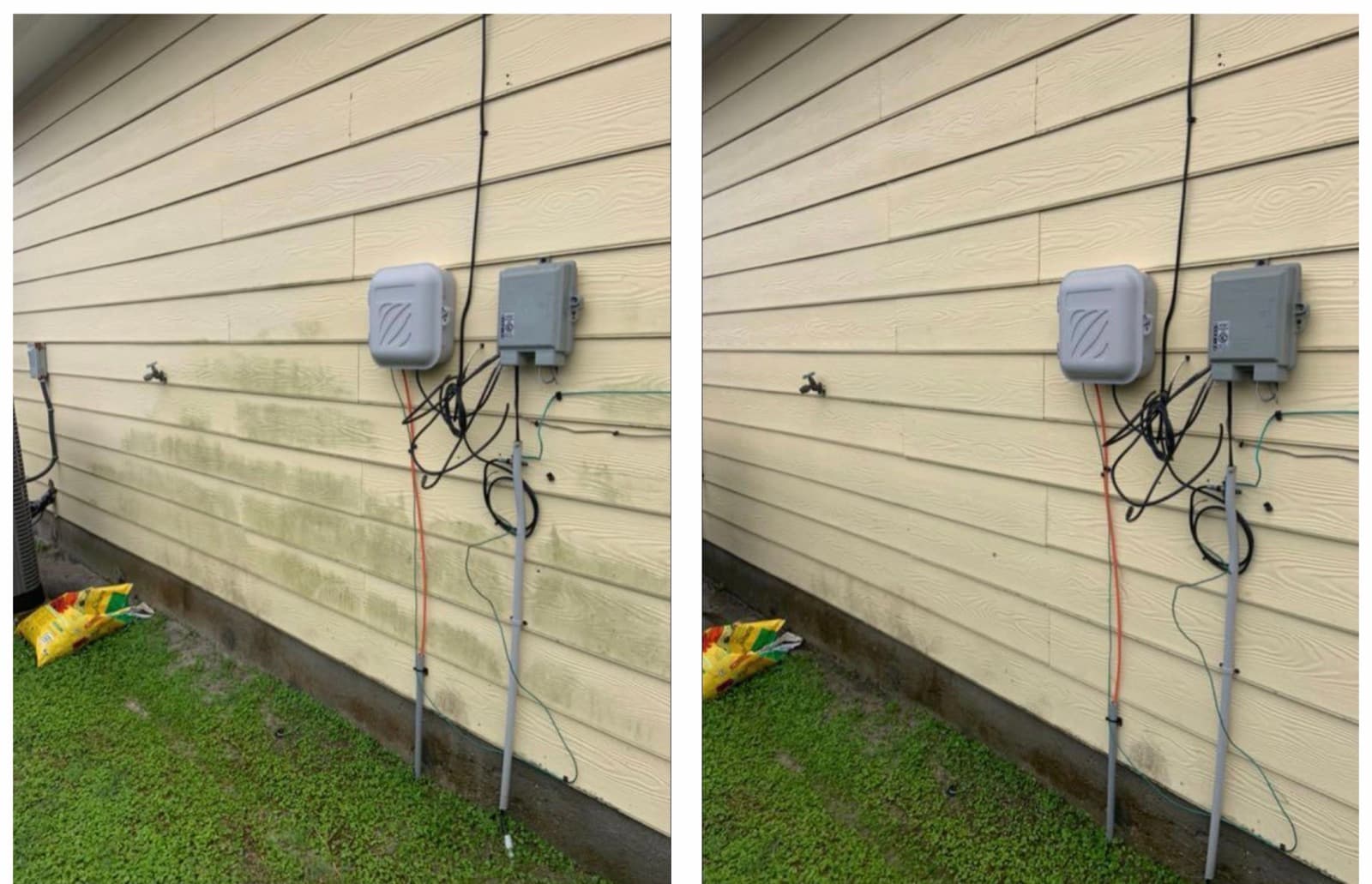
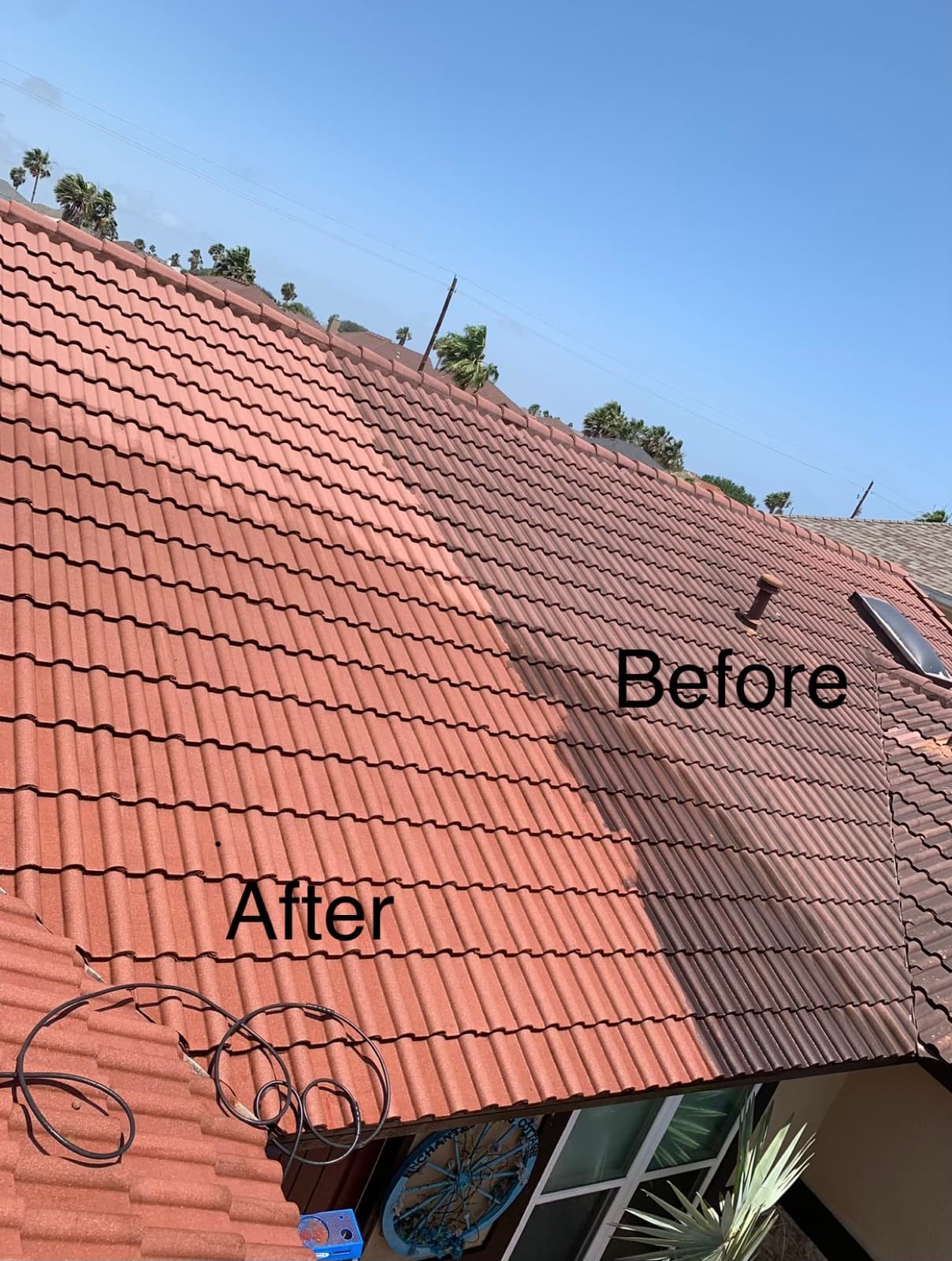
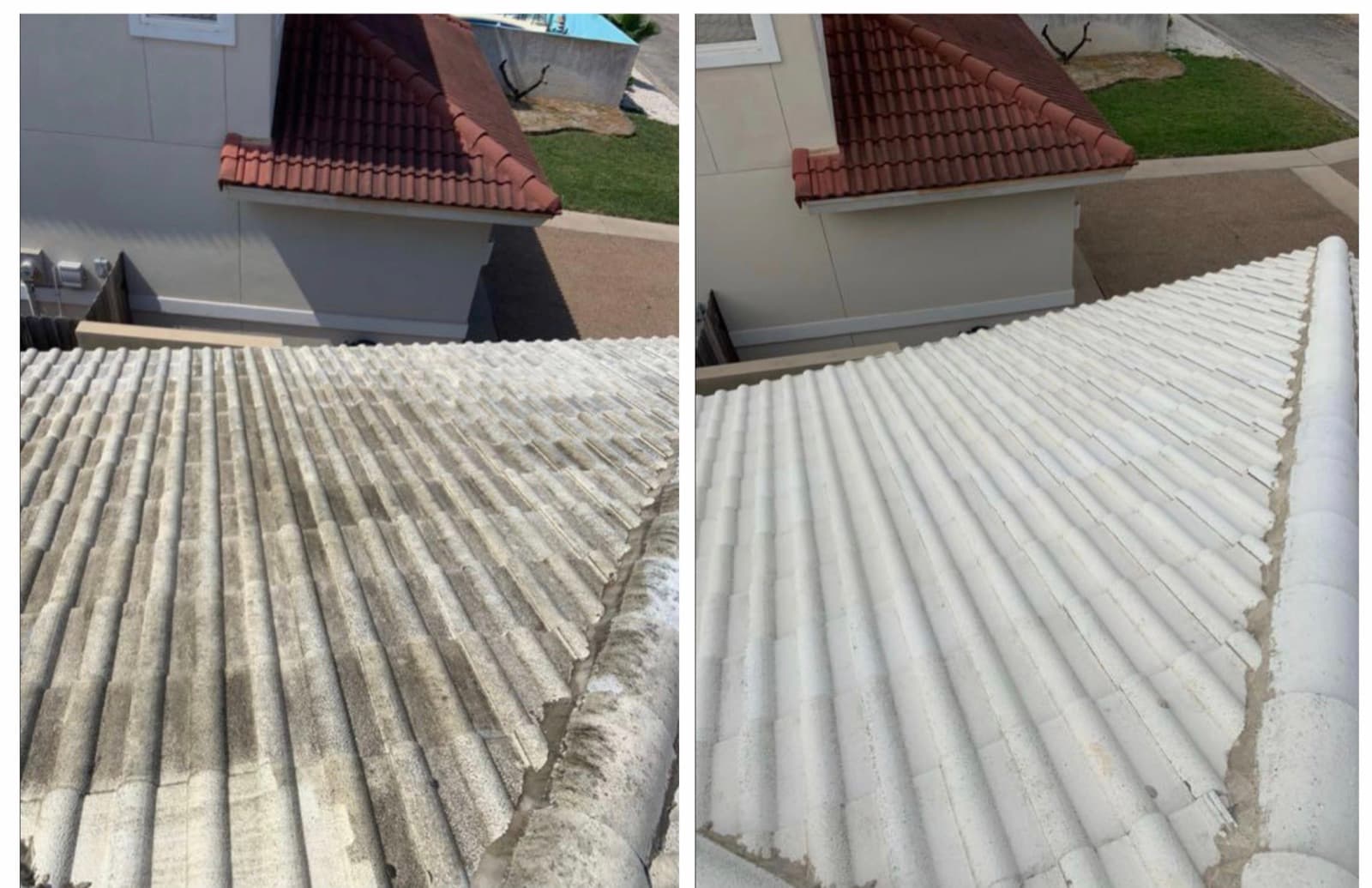
If the exterior of your home has started to look dull, blotchy, or shadowed with green and gray streaks, you're not imagining it — and you're not alone in DFW. Our heat and humidity make house exteriors a magnet for organic growth, and the wrong cleaning method can do real damage. Here's how to clean brick, stucco, and siding the right way in North Texas.
Why Your House Gets Dirty Here
The metroplex hands your home's exterior a tough environment. Long humid summers feed algae and mildew, our famous pollen coats everything yellow each spring, and red clay dust drifts up onto lower walls. North-facing walls and shaded sides — think the parts of the house under your oak trees in Richardson or shadowed by a neighbor's two-story in Frisco — stay damp longer and grow that green-black film fastest.
That dark streaking and the dingy haze aren't just dirt sitting on the surface. A lot of it is living organic growth, and that distinction changes everything about how you should clean it.
The Golden Rule: Soft Wash, Don't Blast
Here's the single most important thing to understand about washing a house: you almost never want high pressure on your home's exterior.
High pressure can crack stucco, drive water behind siding, blow out mortar joints in brick, and strip paint. It also doesn't solve the real problem, because blasting algae off only removes the surface growth and leaves the roots behind to return in weeks.
The professional method is soft washing — low pressure combined with cleaning solutions that kill algae, mildew, and mold at the root. The solution does the work, not the force of the water. You apply it, let it dwell, and rinse gently. The growth dies, releases its grip, and washes away, and because you killed it at the root, it stays gone far longer.
Soft Wash vs. Pressure Wash at a Glance
| Surface | Right Method | Why |
|---|---|---|
| Brick | Soft wash | Protects mortar joints from blowout |
| Stucco | Soft wash | Prevents cracking and chipping |
| Vinyl/fiber-cement siding | Soft wash | Avoids water intrusion behind panels |
| Painted wood | Soft wash | Won't strip or peel the paint |
| Concrete driveway/patio | Pressure wash | Hard surface that can take the force |
The pattern is simple: hard, non-porous flatwork gets pressure; the house gets a soft wash.
Cleaning Brick the Right Way
Brick looks tough, and it is — but the mortar between the bricks is the weak point. North Texas brick homes, especially the older ones in Dallas and Fort Worth, often have mortar that's decades old. High pressure can chew it right out of the joints.
Soft washing lifts the dirt, pollen, and organic staining out of the porous brick face without touching the mortar. If your brick has white, chalky patches, that's efflorescence — mineral salts leaching out of the masonry — and it needs a specific treatment rather than just water.
Cleaning Stucco Without the Cracks
Stucco is everywhere in newer DFW builds around Prosper, Celina, and Las Colinas, and it's one of the easiest surfaces to damage. It's essentially a thin, textured cement coating, and a strong pressure tip will gouge it or chip it in a heartbeat.
Stucco also holds onto organic growth because its texture gives algae plenty of places to anchor. A gentle soft wash with the right cleaning solution soaks into that texture, kills the growth, and rinses clean without harming the finish.
Cleaning Siding and Trim
Vinyl and fiber-cement siding clean up beautifully with a soft wash. The danger with siding is water getting behind the panels, which high pressure will absolutely do — and trapped moisture inside a wall is a much bigger problem than a dirty exterior. Low pressure keeps the water where it belongs while the solution handles the grime.
Don't forget the trim, soffits, and fascia up near the roofline. That's often where the worst black streaking hides, and it's right next to your gutters.
Common House Washing Mistakes
- Renting a pressure washer and going to town. This is the number one way homeowners damage their own brick, stucco, or siding. The machine is powerful and the surface is more delicate than it looks.
- Cleaning only what you can reach. The upper walls and second story collect the most growth and are the hardest to do safely from a ladder. This is genuinely worth leaving to pros with the right equipment.
- Forgetting the plants. Cleaning solutions need to be applied responsibly and your landscaping pre-wetted and rinsed, or you can stress the shrubs and beds you worked hard to grow.
- Treating it as a one-time fix. In our humidity, organic growth returns. An annual soft wash keeps it from ever getting bad.
How Often Should You Wash Your House?
Most DFW homes do well with a soft wash once a year. Heavily shaded homes or those tucked under big oaks may want it more often, because the damp, low-light conditions let algae take hold faster. Many HOAs across the metroplex also expect exteriors to be kept clean, and an annual wash keeps you comfortably compliant.
The Bottom Line
Your home's exterior is too valuable — and too easy to damage — to clean with brute force. Soft washing protects your brick, stucco, and siding while killing the organic growth at the root, so you get a clean that actually lasts through our long Texas seasons.
If your home anywhere in DFW — Plano, Frisco, McKinney, Allen, Fort Worth, Dallas, and everywhere in between — is ready to look its best again, Summit Surface Solutions is happy to help. We offer free, no-pressure quotes, so reach out whenever you'd like us to take a look.
Need this done right?
Summit Surface Solutions serves Dallas–Fort Worth, Texas with insured, method-smart exterior cleaning. Free quotes, guaranteed results.