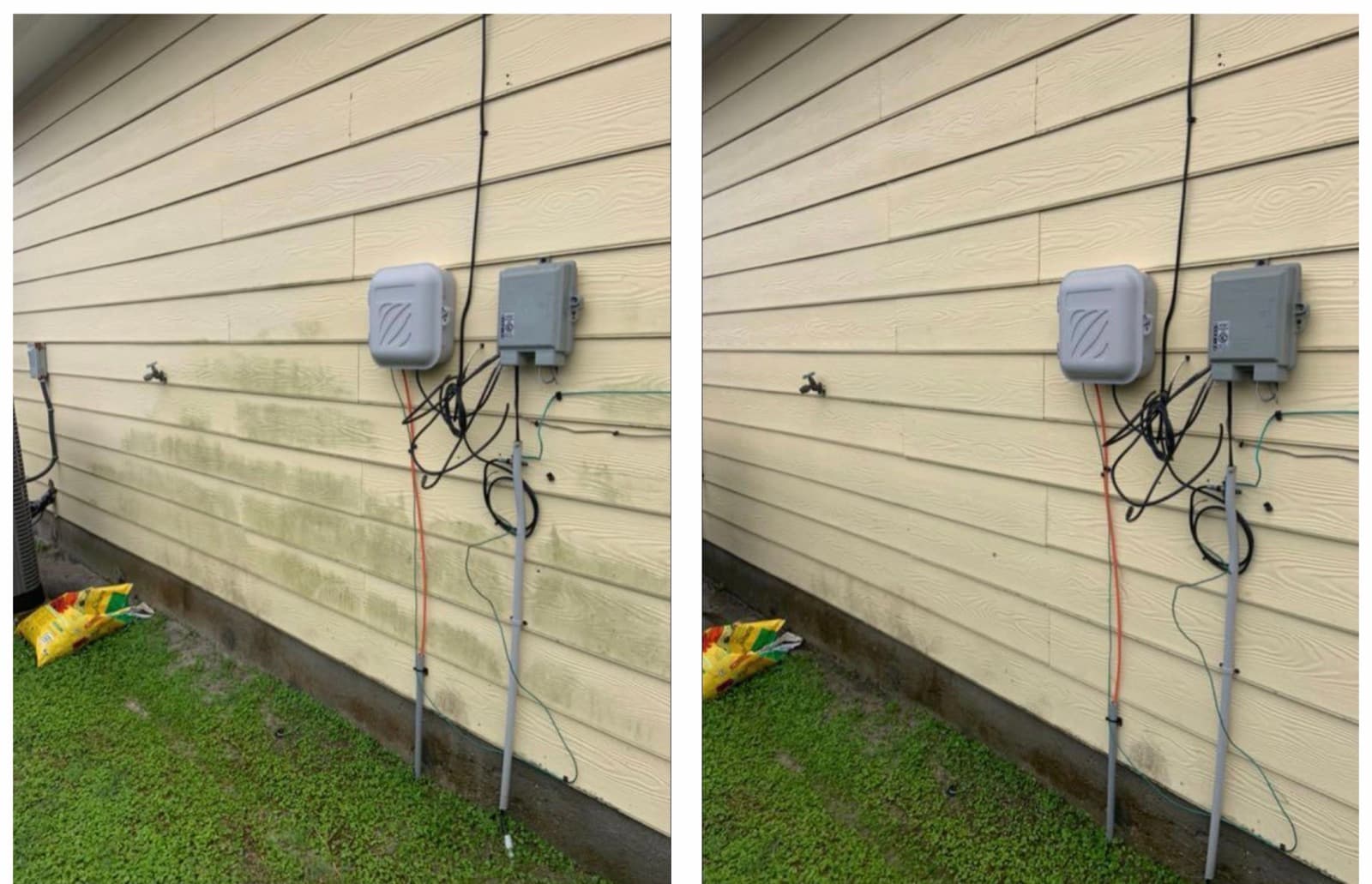
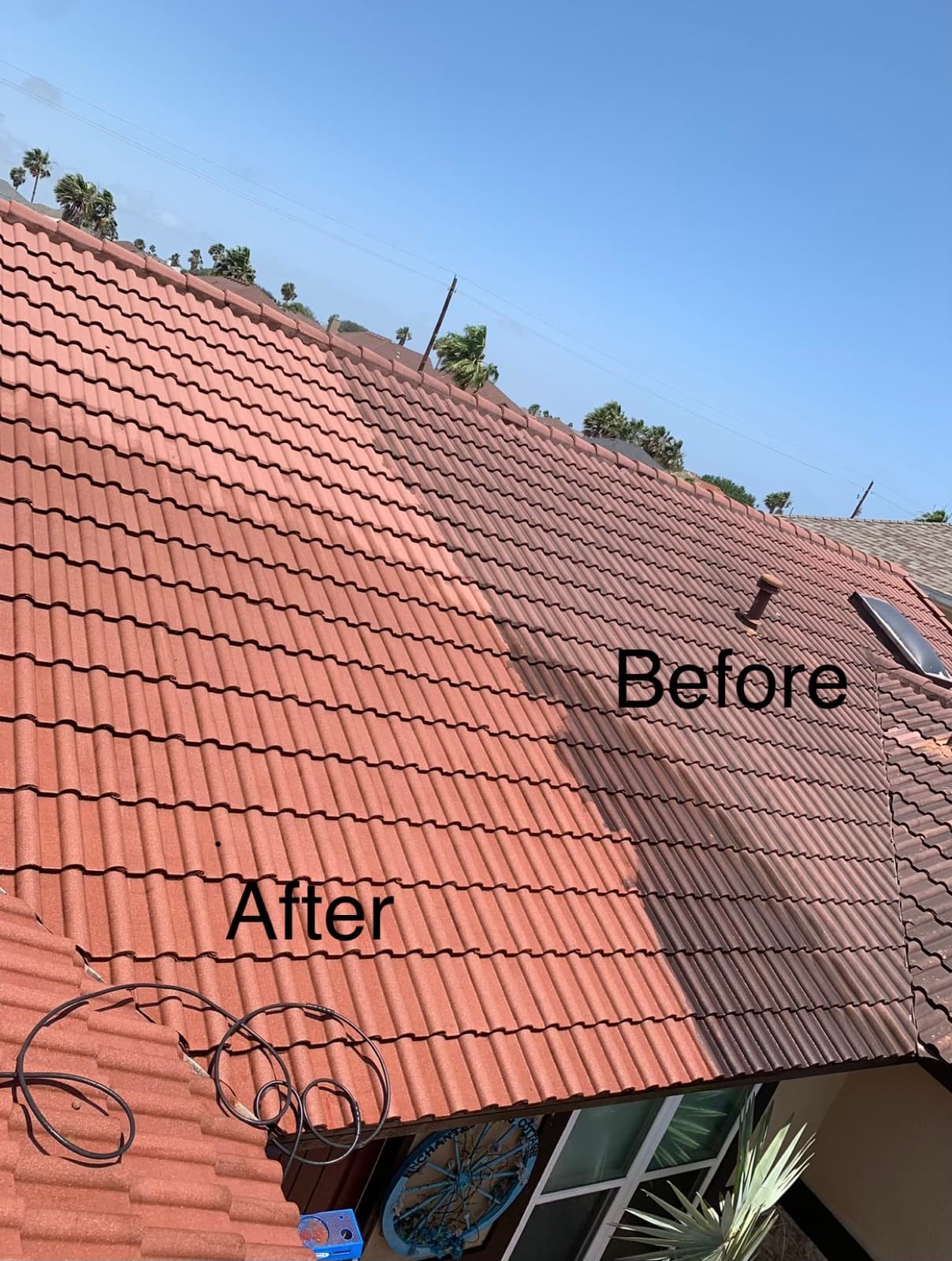
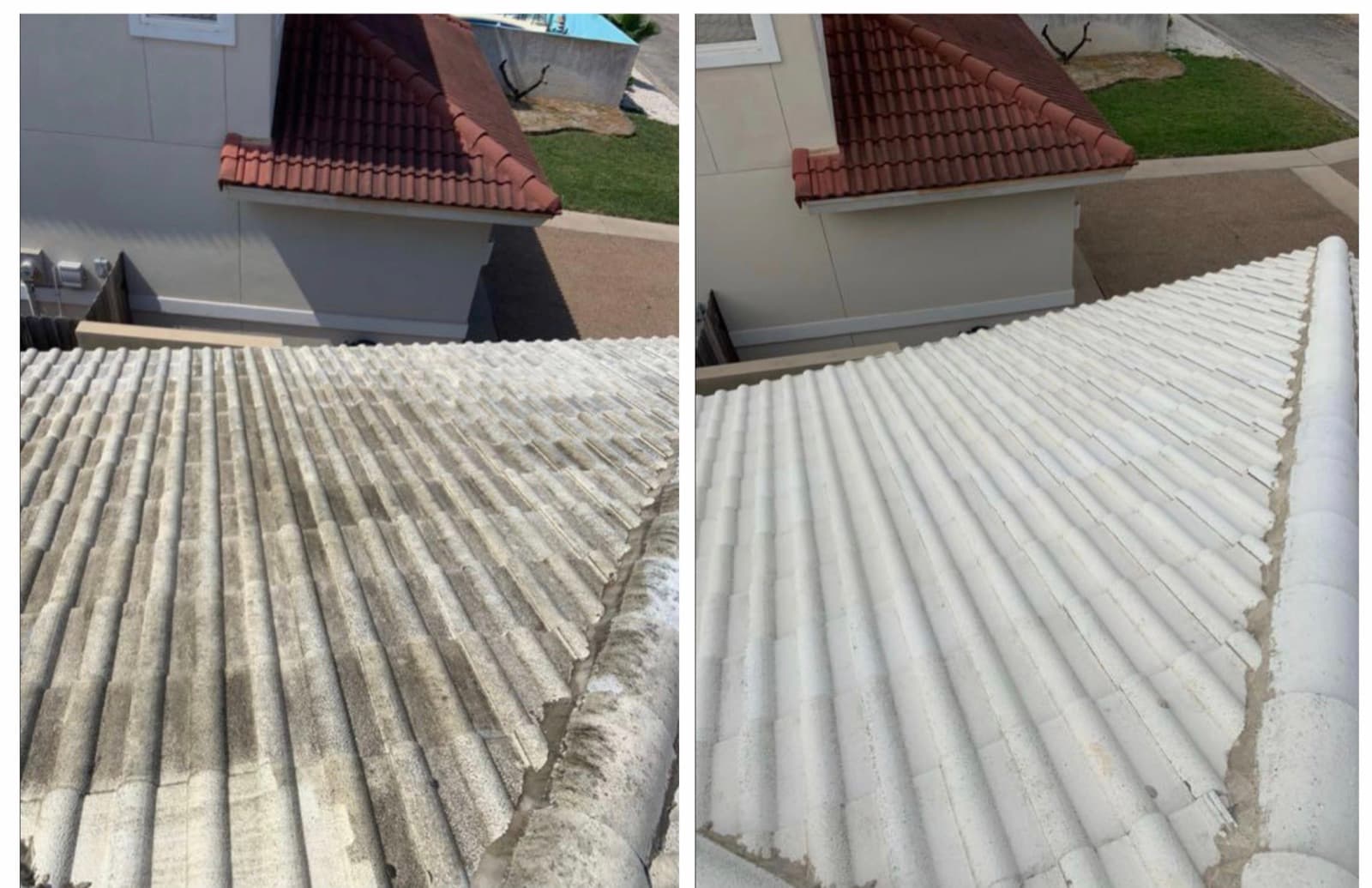
Pool Deck Cleaning: Safer, Cleaner Surfaces for Texas Summers
Keep your DFW pool deck safe and beautiful all summer. Learn how to clean travertine, concrete, and stone decks without damage — and stop the slippery algae buildup.
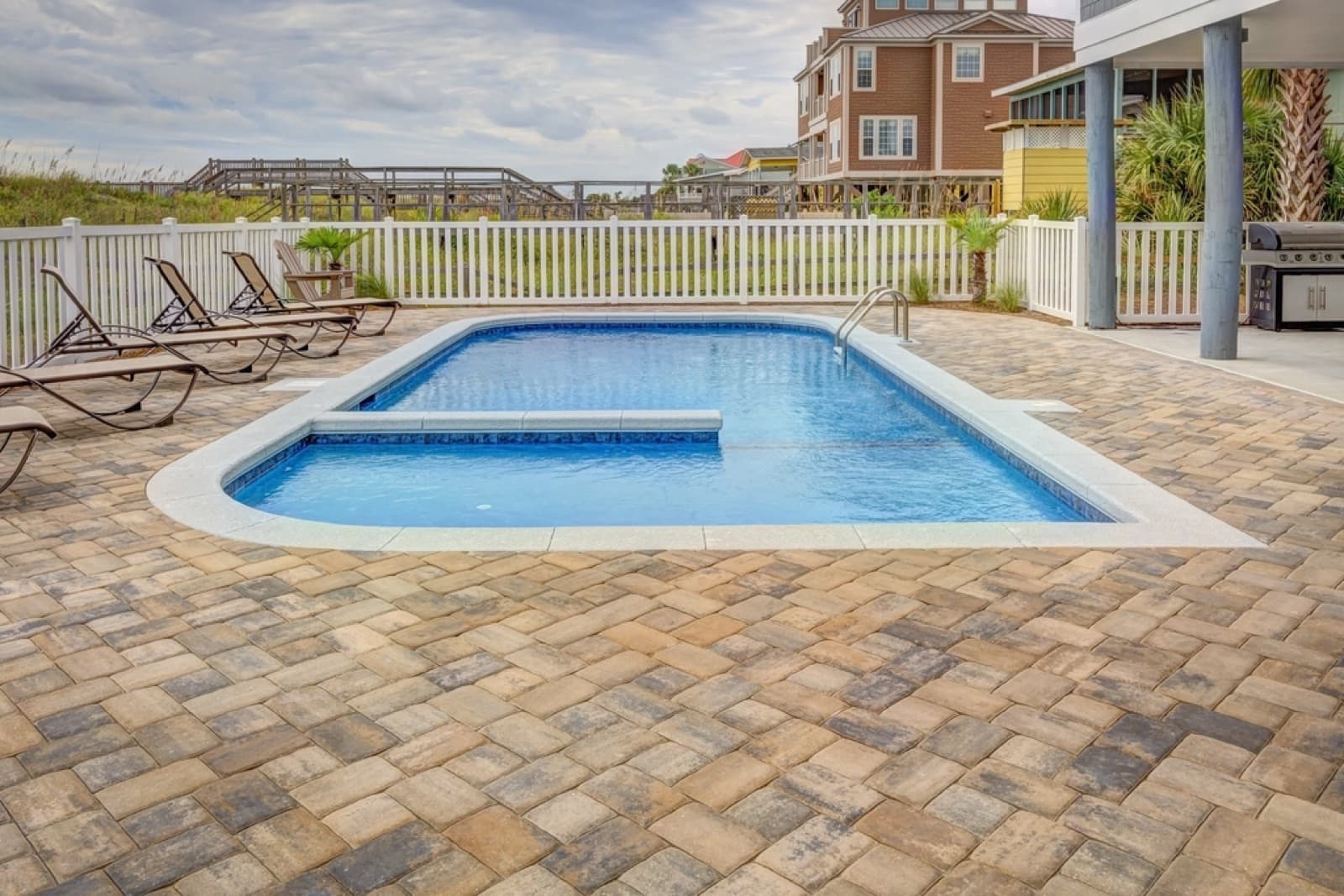
Your pool deck takes more abuse than almost any surface in your yard. It bakes in the Texas sun, stays damp around the edges, collects sunscreen and leaves, and gets walked on by bare feet all summer. Over a season or two, that combination turns a beautiful deck into something slick, stained, and a little hazardous.
Here's how pool deck cleaning actually works in North Texas, why the method matters more than you'd think, and how to keep your deck safe and good-looking through every Frisco, Allen, and Southlake summer.
Why Pool Decks Get Slippery and Stained
A pool deck lives in a wet, shaded, humid microclimate — exactly what algae, mold, and mildew love. Even in our hot DFW climate, the area right around the waterline and any spots under patio covers or oak trees stay damp enough for organic growth to take hold.
The usual problem areas:
- Algae and biofilm that make the deck dangerously slick, especially when wet
- Black mildew spotting in shaded corners and textured stone
- Sunscreen, body oil, and drink spills ground into porous surfaces
- Red clay and pollen film blown in every spring
- Hard-water and calcium staining from splash-out and sprinkler overspray
- Leaf and tannin stains from overhanging oaks and crepe myrtles
The slipperiness is the part that matters most. A pool deck is the worst possible place for a slip hazard, and that thin layer of algae biofilm is exactly what sends bare feet sliding.
Match the Method to the Material
This is where pool decks get tricky. They're built from a range of materials, and several of them will not tolerate aggressive high pressure.
Travertine, flagstone, and natural stone are softer and more porous than they look. Hit them with too much pressure and you can pit the surface, blow out the grout or mortar joints, and leave permanent etching. These almost always call for soft washing — low pressure plus a cleaning solution that lifts grime and kills algae at the root so it doesn't come right back.
Stamped and decorative concrete has a sealer and a color coat that high pressure can strip or fade. It needs a gentler touch and the right cleaning solution rather than brute force.
Broom-finished and exposed-aggregate concrete is tougher and can handle pressure washing, often with a surface cleaner — the spinning disc attachment that cleans concrete evenly without leaving wand stripes.
| Deck Material | Recommended Approach |
|---|---|
| Travertine / natural stone | Soft washing — low pressure, algae-killing solution |
| Stamped or sealed concrete | Gentle wash to protect the sealer and color |
| Broom-finish concrete | Pressure washing with a surface cleaner |
| Exposed aggregate | Pressure washing, careful not to dislodge stone |
The honest takeaway: the wrong method can permanently damage an expensive deck. Knowing the material first is half the job.
What About the Pool Itself?
A fair question — does cleaning the deck mess up the pool water? With the right approach, no. A careful crew controls runoff, rinses thoughtfully, and uses solutions appropriate for a pool-adjacent area. We keep cleaning products out of the water and protect your landscaping and equipment around the deck. If you're concerned about chemistry, it's an easy thing to plan around.
How Often Should You Clean a Pool Deck in DFW?
For most North Texas homes, once a year is the baseline — ideally in spring, right before swim season kicks off. That clears off the winter's worth of pollen, tannin, and mildew so you start summer with a clean, safe surface.
A few situations call for more frequent cleaning:
- Heavy tree cover (oaks, crepe myrtles) dropping leaves and tannins
- North-facing or shaded decks that stay damp and grow algae faster
- Decks that already feel slick underfoot — that's a safety cue, not a someday item
- Homes in humid pockets near greenbelts or creeks
Common Mistakes Homeowners Make
- Renting a pressure washer and going at travertine. This is the single fastest way to ruin a stone deck — etching and blown joints are not reversible.
- Only cleaning what you can see standing up. The waterline edge and shaded corners are where the slick algae lives.
- Waiting until someone slips. By the time the deck feels slippery, the biofilm is well established.
- Using straight bleach from a jug. It can lighten stone unevenly, harm your plants, and doesn't address the root growth the way a proper soft-wash solution does.
A Quick Word on Safety
If you take one thing from this article, make it this: a clean pool deck is a safer pool deck. Removing algae and biofilm restores traction to the surface, which genuinely lowers the risk of a slip on wet stone or concrete. With kids and bare feet everywhere all summer, that's worth a lot.
Let's Get Your Deck Ready for Summer
If your pool deck is looking dingy, feeling slick, or just due for its yearly refresh, Summit Surface Solutions would be glad to help. We clean travertine, stone, and concrete pool decks across the DFW metroplex with the right method for your specific material — and results that last through the season. Reach out anytime for a free, no-pressure quote, and we'll have your deck ready before the first cannonball.
Need this done right?
Summit Surface Solutions serves Dallas–Fort Worth, Texas with insured, method-smart exterior cleaning. Free quotes, guaranteed results.