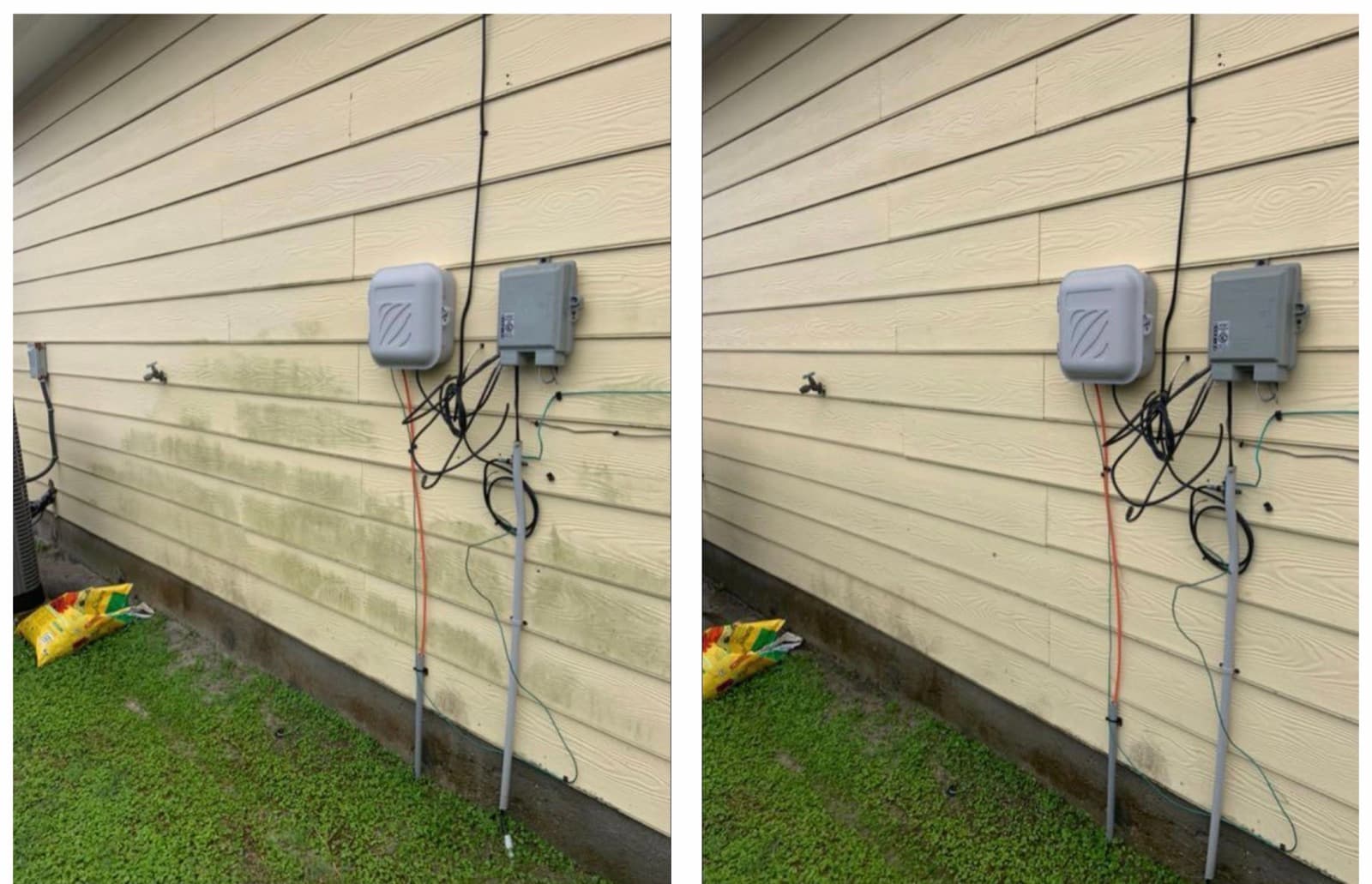
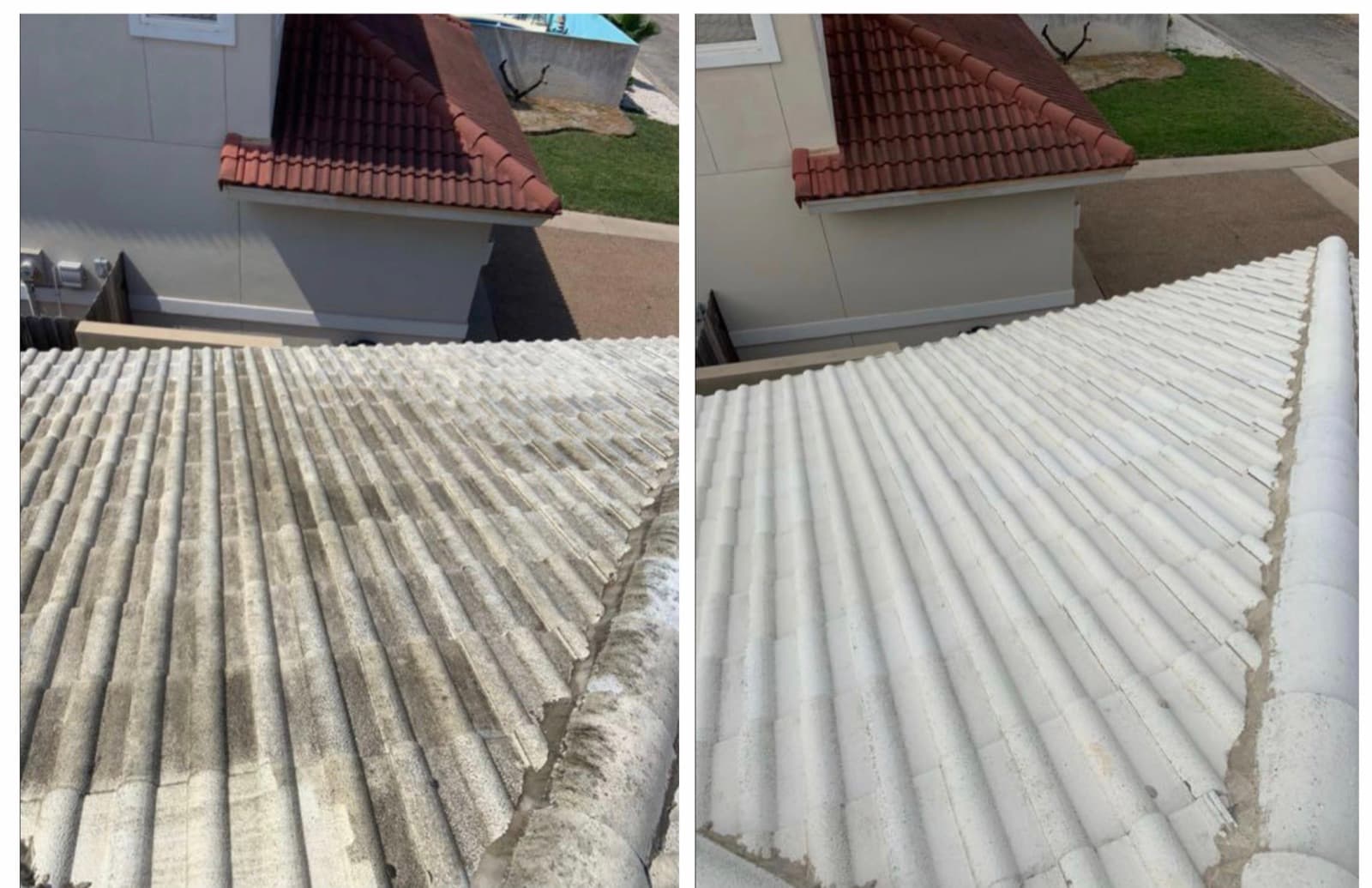
Roof Soft Washing: Tile vs. Shingle vs. Metal
Tile, shingle, and metal roofs each need a different touch. Here's how soft washing safely clears algae and black streaks from every roof type in the DFW heat.
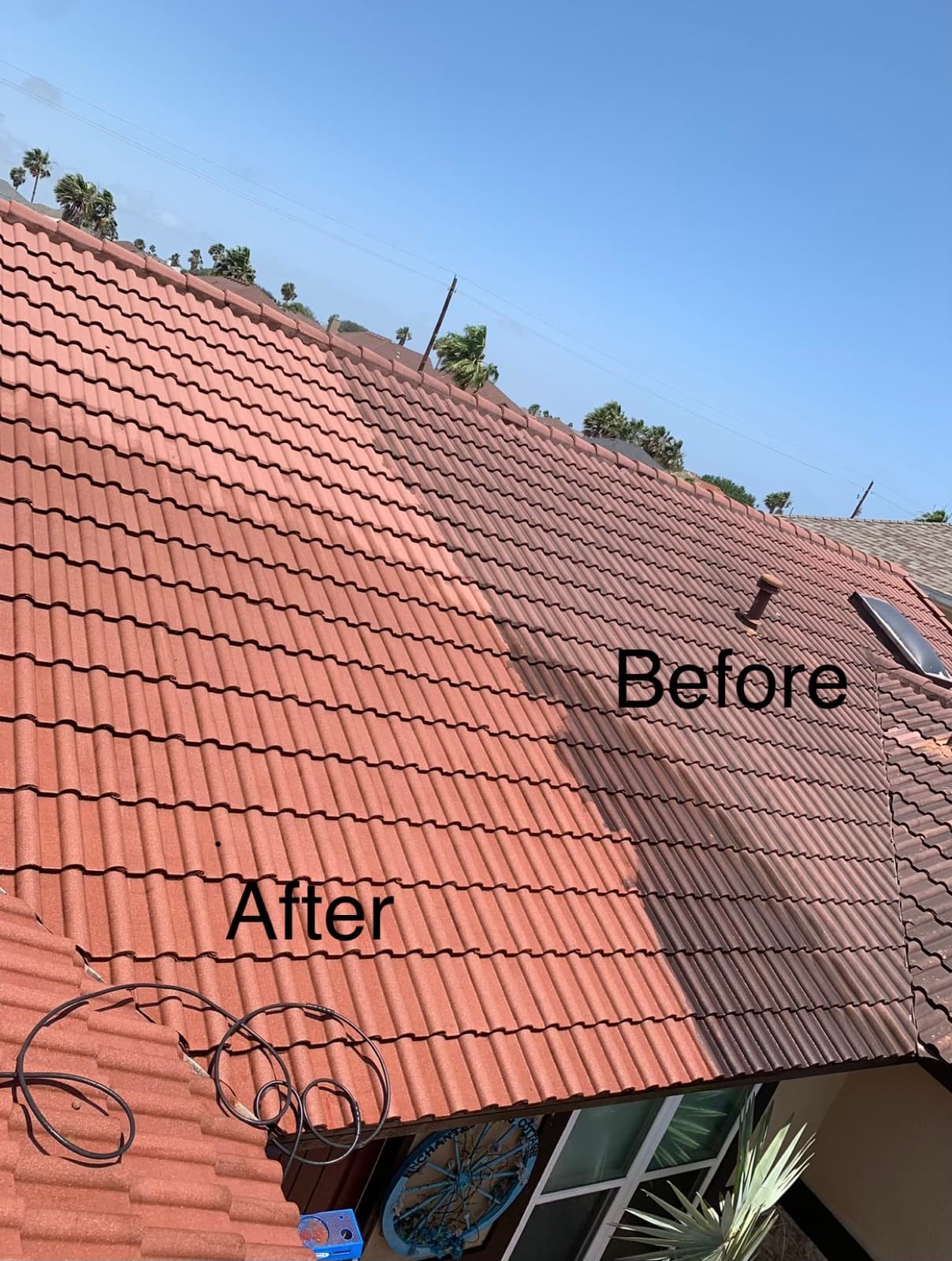
Look up at almost any roof in the Dallas–Fort Worth metroplex and you'll eventually spot the same thing: dark streaks running down from the ridge, usually worst on the north-facing slope. That's roof algae, and our warm, humid stretches are practically a greenhouse for it. The good news is that it cleans up beautifully — as long as the method matches the material. Tile, shingle, and metal each ask for a slightly different approach.
The one thing they all have in common: soft washing, never high pressure. Blasting a roof with a pressure washer strips protective surfaces, drives water where it shouldn't go, and can void your roofing warranty in a single afternoon. Soft washing uses low pressure plus cleaning solutions that kill the algae at the root, so it actually stays gone instead of growing back in a few months.
First, what are those black streaks?
The dark staining you see is a hardy organism called Gloeocapsa magma — roof algae. It feeds on the limestone filler in shingles and thrives in shade and humidity, which is why it shows up first on the side of the roof that never gets much sun. In a tree-heavy neighborhood like parts of Richardson, Plano, or older Fort Worth, it spreads even faster because oak cover keeps the surface damp.
It isn't just ugly. Algae holds moisture against the roof, traps heat, and over time shortens the life of the material underneath. Clearing it is as much about protecting your investment as it is about curb appeal.
How the three roof types compare
Here's the quick version before we dig into each one:
| Roof type | Cleaning method | Main risk if done wrong | Typical cleaning interval |
|---|---|---|---|
| Asphalt shingle | Soft wash only | Stripped granules, voided warranty | Every 2–3 years |
| Concrete or clay tile | Soft wash, careful footing | Cracked tile, lifted edges | Every 2–4 years |
| Metal (standing seam, etc.) | Soft wash, gentle solution | Scratched coating, oxidation | Every 3–5 years |
Asphalt shingle roofs
Shingles are by far the most common roof in DFW, and they're also the most commonly damaged by the wrong cleaning method. The colored granules on top aren't just for looks — they're the shingle's sunscreen and waterproofing. High pressure knocks those granules loose by the handful, and once they're gone, the shingle ages fast.
Soft washing is the only safe way to clean a shingle roof. Low pressure carries the cleaning solution up onto the surface, the solution kills the algae and mildew, and a gentle rinse carries it away. No scrubbing, no blasting, no granule loss.
A few things we watch for on shingle roofs:
- Streaking direction — algae runs downhill, so we treat from the ridge down to let the solution flow naturally.
- Landscaping below — the solution is rinsed and the plants around the foundation get a pre-soak so nothing gets stressed.
- Warranty language — most shingle manufacturers explicitly require low-pressure cleaning. Soft washing keeps you on the right side of that.
Plan on a soft wash every two to three years for most homes, sooner if you back up to a greenbelt or sit under heavy tree cover.
Concrete and clay tile roofs
Tile roofs are gorgeous and you see plenty of them on Spanish- and Mediterranean-style homes around Frisco, McKinney, and the nicer pockets of Dallas. Tile is durable, but it has its own quirks. Concrete tile is porous, so algae and moss can really dig in, and individual tiles can crack or shift under careless foot traffic.
Soft washing handles the staining without touching the tile's integrity. The cleaning solution does the work while the tile stays put. The skill here is less about the wash and more about how you move across the roof — stepping on the strongest part of each tile, spreading weight, and knowing which tiles are walkable at all. A clay barrel tile and a flat concrete tile are not the same animal.
Common mistakes we see on tile:
- Renting a pressure washer and cracking a dozen tiles trying to "blast" moss out of the valleys.
- Sealing dirty tile, which locks the algae underneath and makes it permanent.
- Ignoring the underlayment — a lot of DFW tile roofs are 20-plus years old, and the felt beneath the tile is the real waterproofing. Gentle cleaning protects it.
Metal roofs
Metal roofs — standing seam, corrugated, and the like — are showing up more and more on both modern builds and barn-style homes out toward Aledo and the rural edges of the metroplex. Metal sheds algae better than shingle, but it's not immune, and it picks up oxidation, chalking, and tree gunk.
The catch with metal is the factory coating. That painted or Kynar finish is what gives the roof its color and corrosion resistance, and it scratches. High pressure and abrasive brushes are out. A soft wash with a gentle, coating-safe solution lifts the grime and algae while leaving the finish intact.
Done right, a metal roof cleans up to look nearly new, and because metal resists regrowth a little better, you can often stretch the interval to every three to five years.
Why DIY roof cleaning is the one job to skip
We're all for a capable homeowner tackling a driveway. A roof is different. You're dealing with slick, steep, fragile surfaces, often two stories up, with cleaning chemicals and a hose in hand. Add the very real chance of using too much pressure on the wrong material and you've got a recipe for an injury, a damaged roof, or both.
This is genuinely the job where calling a pro pays for itself — not because the wash is complicated, but because the consequences of a slip or a wrong nozzle are so steep.
Quick FAQ
Will soft washing damage my shingles? No — that's the whole point. Soft washing uses pressure no stronger than a garden hose. It's the high-pressure approach that damages roofs.
How long until the algae comes back? Because soft washing kills it at the root rather than just rinsing the surface, you typically get years of clean roof, not months.
Do you have to get on the roof? When we can clean safely from below or from edges we will, but tile and some steep shingle roofs call for careful on-roof work by someone who knows where to step.
If those black streaks are bugging you every time you pull into the driveway, we'd be glad to take a look. Summit Surface Solutions soft washes tile, shingle, and metal roofs all across DFW, and we're always happy to give you a free, no-pressure quote so you know exactly what your roof needs — and what it doesn't.
Need this done right?
Summit Surface Solutions serves Dallas–Fort Worth, Texas with insured, method-smart exterior cleaning. Free quotes, guaranteed results.