Rust Stain Removal from Concrete and Brick
Stubborn rust stains on your DFW concrete or brick? Learn what causes them, why pressure washing alone won't work, and how to remove rust without damaging the surface.
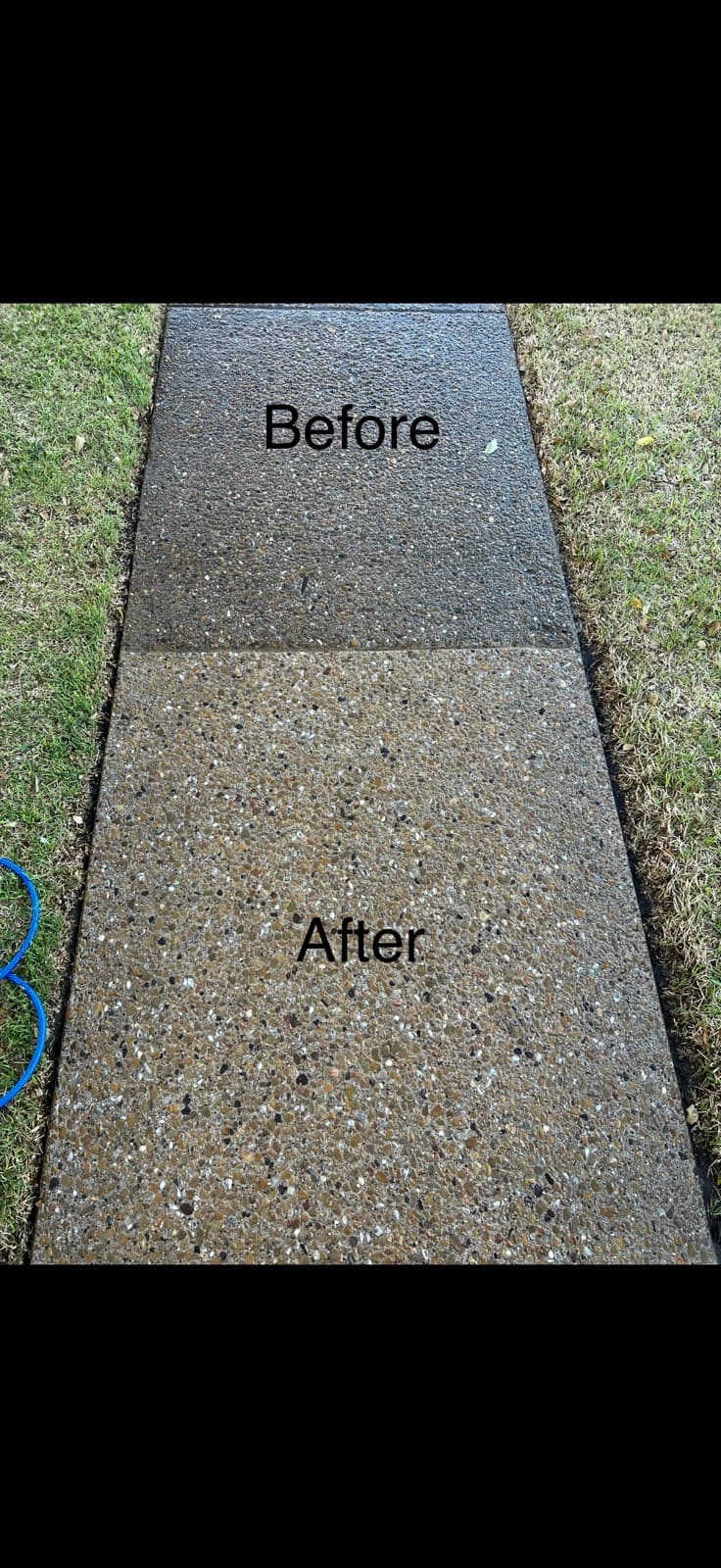
Few stains are as frustrating as rust on concrete or brick. It shrugs off your garden hose, laughs at a regular pressure washing, and seems to spread a little wider every season. If you've got orange streaks creeping across your driveway or up your brick, here's what's actually going on and how it gets removed.
The short version: rust is a chemical stain, and it takes a chemical solution to remove it — not just more pressure.
Where DFW Rust Stains Come From
North Texas yards are practically engineered to produce rust stains. A few of the most common sources we see across Plano, Allen, and Fort Worth:
- Sprinkler systems. Our hard water is loaded with iron and minerals. Every cycle, a sprinkler head sprays that mineral-rich water onto concrete and brick, and over months it leaves orange fan-shaped stains exactly where the spray lands.
- Fertilizer. Most lawn fertilizers contain iron. Spread granules onto the driveway, water them in, and you get rust spotting. A broadcast spreader that flings pellets onto the concrete is a classic culprit.
- Metal furniture and tools. A wrought-iron chair, a forgotten rebar stake, a metal planter, or a bike left out in the rain — anything ferrous sitting on damp concrete bleeds rust into it.
- Well water and irrigation lines with high iron content compound the sprinkler problem.
Recognizing the source matters, because if you don't fix the cause — re-aim the sprinkler, move the metal — the stain comes right back after you clean it.
Why Pressure Washing Alone Won't Cut It
Here's the part that surprises people. Rust isn't sitting on top of the surface — it has chemically bonded into the pores of the concrete or brick. A surface cleaner and high pressure will blast away dirt, algae, and grime, but it drives right past rust because the stain is bonded into the material, not resting on it.
Worse, cranking up the pressure to fight rust can actually damage the surface — etching concrete, opening the pores wider, and on brick, eroding the soft mortar joints and the brick face itself. You end up with a damaged surface and the rust still there.
The real fix is a specialized rust-removing treatment — an oxalic or otherwise rust-specific cleaner that chemically breaks the bond between the iron oxide and the masonry. Applied correctly, it lifts the stain out of the pores so it can be rinsed away, with gentle pressure rather than aggressive blasting.
The Right Process
A proper rust removal on concrete or brick generally goes like this:
- Identify and address the source — adjust the sprinkler head, remove the metal object, switch the fertilizer routine.
- Pre-clean the surface so the rust treatment can reach the stain instead of fighting through grime.
- Apply the rust-specific treatment and give it dwell time to break the chemical bond.
- Agitate and rinse with controlled, gentle pressure — never high-PSI blasting.
- Repeat on deep stains. Set-in rust may need a second application.
Brick Needs Extra Care
Brick and mortar deserve a special note. They're far more delicate than driveway concrete. The mortar joints are soft, and the brick face can be eroded or discolored by both excessive pressure and the wrong chemical concentration. Acidic cleaners that are fine on concrete can burn or lighten brick if misapplied. This is genuinely a case where technique and the right dilution matter — a botched DIY attempt can leave brick looking worse than the rust did.
Common Mistakes
- Reaching for more pressure. It won't remove bonded rust and it can permanently etch the surface.
- Using random household acids. Wrong concentration on brick or stone can discolor or damage it.
- Cleaning without fixing the cause. If the sprinkler still hits the driveway, the stain returns within weeks.
- Letting it sit for years. Older, deeper rust stains are harder to fully remove — sooner is easier.
A Realistic Expectation
Fresh rust stains usually come out cleanly. Older stains that have soaked in for years may lighten dramatically but occasionally leave a faint ghost, especially on porous or already-weathered concrete. A good crew will tell you up front what's realistic for your specific stain rather than overpromising.
Let's Get Rid of Those Orange Streaks
If rust stains are marring your driveway, walkway, or brick, Summit Surface Solutions can help. We use the right rust-specific treatments and gentle technique to lift stains without damaging your concrete or brick — and we'll point out the source so they don't just come back. Serving homeowners across the DFW metroplex with free, no-pressure quotes, we're glad to take a look whenever you're ready.
Need this done right?
Summit Surface Solutions serves Dallas–Fort Worth, Texas with insured, method-smart exterior cleaning. Free quotes, guaranteed results.