Streak-Free Windows: Beating Texas Hard Water Spots
How to get streak-free windows in DFW and remove stubborn Texas hard water spots for good. A local pro's guide to spotless glass that stays clear.
You clean your windows, step back to admire them, and the moment the sun hits the glass you see it — streaks, smudges, and those cloudy white spots that no amount of paper towel seems to fix. If that's you, the culprit is almost certainly North Texas hard water, and beating it takes the right approach rather than the right elbow grease.
Why Texas Windows Are So Hard to Keep Clean
DFW has notoriously hard water — water loaded with dissolved minerals like calcium and magnesium. When that water dries on glass, the water evaporates but the minerals stay behind as chalky white deposits. Over time those deposits build into the stubborn, cloudy spots that wreck an otherwise clean window.
The biggest source of hard water spots isn't rain — it's your sprinkler system. If your irrigation heads spray the side of the house, the windows in their path get hit several times a week, every week, all summer. Combine that with our pollen, red clay dust, and the constant heat that bakes everything on fast, and you've got a recipe for glass that never quite looks clean.
Neighborhoods all over the metroplex deal with this, from the newer builds in Frisco and Prosper to the established streets of Plano and Richardson. It's not your technique — it's the water.
Why Paper Towels and Glass Spray Fall Short
The classic spray-and-wipe routine has two problems in our climate:
- It leaves lint and streaks. Paper towels shed fibers and push cleaner around rather than lifting it off, and in the Texas heat the spray dries before you can buff it clear.
- It does nothing for mineral deposits. Hard water spots are bonded minerals, not surface dirt. Wiping harder just polishes them. You can't wipe away a stain that's chemically stuck to the glass.
The Professional Approach to Streak-Free Glass
Getting truly streak-free windows comes down to three things: the right tools, the right technique, and dealing with the minerals directly.
Squeegees, Not Towels
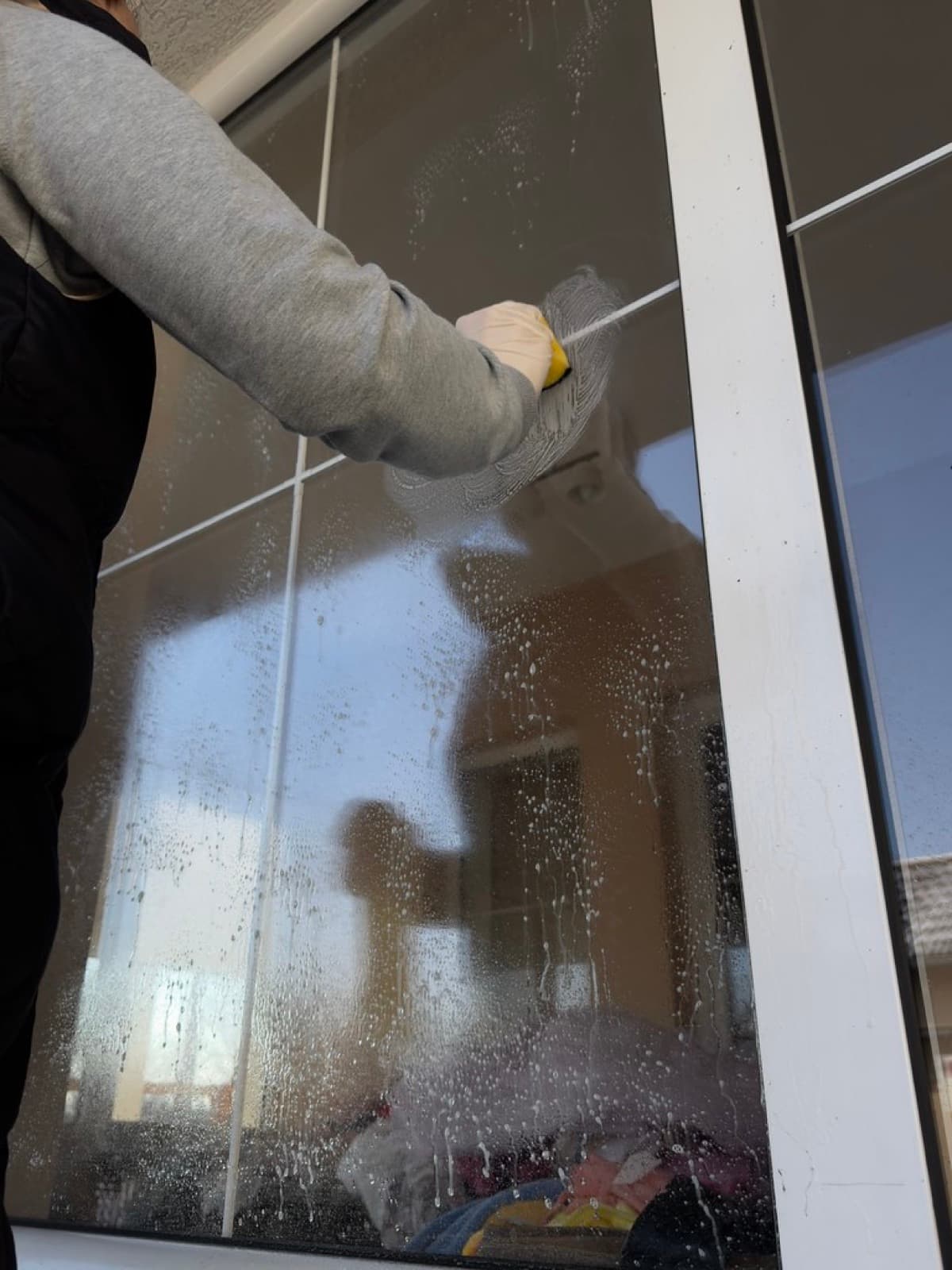
Professionals clean glass with a wetting solution and a squeegee, pulled in overlapping strokes and wiped between passes. The squeegee removes the water and the loosened dirt in one clean motion before it can dry, which is exactly what prevents streaking. The edges get detailed with a lint-free cloth. No fibers, no haze, no streaks.
Working in the Shade
Texas sun is the enemy of clean glass. When you clean a window in direct sun, the solution flashes dry almost instantly and leaves streaks behind. The fix is simple — work on the shaded side of the house and follow the shade around as the day moves. Early morning and the cooler part of the day are ideal.
Treating the Hard Water Spots
This is the step most people miss. Light mineral spotting can be dissolved with a mild acidic cleaner formulated for glass. Heavy, long-standing deposits sometimes need a specialized treatment and gentle polishing to break the bond and lift the minerals off without scratching the glass.
A word of caution: never attack hard water spots with a razor blade or an abrasive pad on a hunch. Tempered glass can have a thin protective surface, and the wrong abrasive can leave permanent scratches that look worse than the spots did. This is a real case where the right product matters more than scrubbing harder.
Don't Forget the Screens and Tracks
A spotless pane behind a dusty screen still looks dirty. A complete window cleaning includes:
- Screens removed, washed, and dried so pollen and dust aren't sitting right against your clean glass.
- Tracks and sills cleared of the gritty buildup of dirt, dead bugs, and red clay dust that collects there.
- Frames wiped down so the whole window reads clean, not just the glass.
How to Keep Spots From Coming Back
The best way to fight hard water spots is to stop feeding them.
- Adjust your sprinkler heads so they're not spraying the windows. This one change makes a bigger difference than anything else.
- Don't let the hose sit on the glass. Rinsing windows with plain hard water and letting it air-dry just creates new spots.
- Clean on a regular schedule before deposits have months to bond and harden. Spots that are a few weeks old come off far easier than spots that have baked on all summer.
How Often Should You Clean Your Windows?
For most DFW homes, exterior windows look their best with a cleaning twice a year — once in spring after the pollen and once in fall. Homes with heavy sprinkler overspray or lots of tree cover may want quarterly attention. Commercial storefronts and offices, where first impressions matter, are often on a monthly or quarterly schedule.
The Bottom Line
Streak-free windows in North Texas aren't about scrubbing harder — they're about using a squeegee, working out of the sun, and treating hard water spots as the mineral deposits they actually are. Get those three right and your glass stays clear, not cloudy.
If the windows on your home or business anywhere in DFW could use that just-installed clarity again, Summit Surface Solutions is glad to help. We serve the whole metroplex and offer free, no-pressure quotes — reach out anytime and we'll take a look.
Need this done right?
Summit Surface Solutions serves Dallas–Fort Worth, Texas with insured, method-smart exterior cleaning. Free quotes, guaranteed results.